
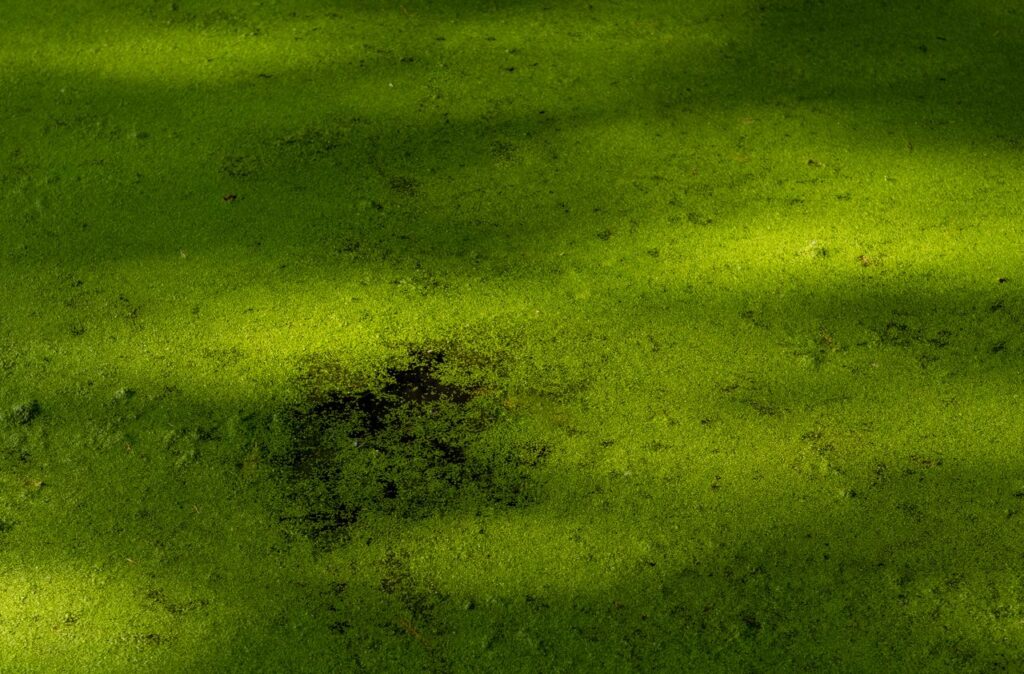
The simplest way to prevent algae in hydroponics is to stop light from reaching nutrient-rich water.
Algae needs:
light,
water,
and nutrients.
A hydroponic reservoir already provides water and nutrients.
So the most effective control point is light.
If you keep reservoirs, channels, pipes, and wet growing surfaces properly covered, algae becomes much harder to establish.
For Malaysian home growers, this matters even more because warm temperatures and strong tropical light can make algae develop quickly.
Why Does Algae Grow So Easily in Hydroponics?
Hydroponic systems create an ideal environment for plant growth.
Unfortunately, that environment can also suit algae.
Algae thrives when it has access to:
moisture,
dissolved nutrients,
light,
and suitable temperatures.
That means even a small crack in a reservoir lid or a transparent container can allow green growth to develop.
The solution is usually not stronger chemicals.
The first question should be:
Where is light reaching the nutrient solution?
Use an Opaque Reservoir
This is one of the most important design choices.
A hydroponic reservoir should ideally be:
opaque,
light-blocking,
and securely covered.
Transparent or translucent containers allow light into the nutrient solution.
Even dark-coloured containers can sometimes transmit light if the plastic is thin.
If you are reusing a container, test it.
Hold it up to strong light.
If you can see light passing through the walls, algae may still be able to grow.
Cover Transparent Containers Completely
Many beginners use:
clear bottles,
food containers,
or transparent storage boxes
because they are cheap and easy to find.
They can still work if they are fully covered.
Use a light-blocking outer layer that does not degrade easily in outdoor conditions.
The goal is simple:
no direct light should reach the nutrient solution.
Do not rely on a partial wrap that leaves the lower reservoir exposed.
Cover the Top Too
A perfectly opaque reservoir can still develop algae if light enters through the top.
Common entry points include:
net-pot openings,
unused holes,
inspection ports,
and loose-fitting lids.
Check the entire top surface.
If you drilled several holes but only use two plants, close the unused openings.
This also helps reduce:
evaporation,
debris,
and mosquito access.
The Net-Pot Area Is a Common Trouble Spot
Algae often appears around the top of net pots where:
nutrient solution,
moist growing medium,
and light
meet.
If the growing medium remains constantly wet and exposed to light, algae can form on the surface.
This is especially common with:
rockwool,
coco plugs,
and other moisture-holding media.
Once the plant is established, the growing medium should not necessarily stay soaked all the way to the surface.
Do Not Keep the Growing Medium Waterlogged
In Kratky systems, the initial solution level may need to sit high enough for young roots to access moisture.
But as roots develop, the water level should gradually fall.
If the growing medium stays constantly saturated and exposed to light, algae has an easy place to grow.
A healthy Kratky setup eventually develops an air gap.
This helps:
root oxygenation,
and also reduces constant wetness around the upper part of the plant.
Block Light Around the Stem Without Suffocating It
If light reaches wet media through gaps around the plant, use a clean, appropriate cover around the net pot.
The cover should block light while still allowing:
air movement,
plant growth,
and drainage.
Do not tightly wrap wet organic material around the plant stem.
You want to shade the wet surface, not create a humid collar around the stem that encourages rot.
Keep Nutrient Solution Off External Surfaces
Spilled nutrient solution can create algae on:
lids,
benches,
channels,
floors,
and reservoir walls.
Wipe spills rather than leaving them to dry and be rewetted repeatedly.
This is particularly useful in Malaysian outdoor systems where rain may repeatedly wet nutrient residue.
A clean growing area gives algae fewer nutrient-rich surfaces to colonise.
Check Channels and Pipes for Light Leaks
In NFT and other recirculating systems, algae may appear inside channels if:
lids do not fit properly,
inspection windows are left open,
or pipes transmit light.
Once algae forms inside a channel, it can spread along the water path.
Choose:
opaque piping,
covered channels,
and properly fitted lids.
Do not assume white plastic is always completely light-proof.
Malaysia’s Strong Sun Makes Small Gaps Important
A tiny amount of sunlight may be enough to support algae.
Strong tropical light entering through:
a loose lid,
clear tube,
or exposed net-pot opening
can create visible growth surprisingly quickly.
Inspect the system during bright daylight.
You may spot light leaks that are not obvious indoors or early in the morning.
Warm Reservoirs Can Make the Problem Worse
Algae needs light first, but warm conditions can help it grow faster.
Malaysia’s hot afternoons can heat small reservoirs significantly.
Warm nutrient solution can also:
reduce dissolved oxygen,
stress roots,
and increase the risk of other microbial problems.
Keep reservoirs:
shaded,
off heat-reflecting surfaces where practical,
and away from direct afternoon sun.
The plant canopy needs suitable light.
The reservoir does not.
Larger Reservoirs Are Usually More Stable
A larger volume of water generally changes temperature more slowly.
This can make the system more stable.
Small bottles and jars may heat up quickly and experience faster swings in:
temperature,
EC,
and water level.
If algae keeps returning in a tiny exposed system, the issue may be partly the design rather than something you need to spray.
Clean the System Between Crops
After harvesting:
remove old roots,
empty the reservoir,
wash away algae,
clean net pots,
and remove nutrient residue.
Do not leave a thick algae layer in place and simply refill the system for the next crop.
Old algae can:
break down,
add organic material,
and make the new system harder to manage.
A clean reset is much easier than trying to control a heavily established layer later.
Clean Before You Sanitise
Physical cleaning should come first.
Scrub away:
algae,
slime,
dead roots,
and deposits.
Then, where sanitation is appropriate, use a product suitable for the system and follow the label instructions.
Disinfectants work more effectively on already-clean surfaces.
Do not treat a dirty reservoir as though chemicals will replace scrubbing.
What About Algaecides?
Chemical algaecides may sound convenient, but they are not the best first solution for a home edible hydroponic system.
The bigger question is why algae is growing.
If light keeps entering the reservoir, killing one batch of algae will not solve the design problem.
Any chemical used in a food-producing hydroponic system should be specifically appropriate for that use and used exactly according to its instructions.
Do not add swimming-pool algaecide or random household chemicals to an edible crop reservoir.
Be Careful With Hydrogen Peroxide
Hydrogen peroxide is often suggested online for algae control.
It is an oxidising chemical and can damage living cells at sufficient concentration.
That includes:
algae,
microorganisms,
and potentially plant roots.
Using an arbitrary strong dose can create more problems than it solves.
If peroxide is used as part of a hydroponic sanitation programme, follow a product and concentration appropriate for that specific purpose.
Do not treat it as a universal “green water cure”.
Do Not Mix Random Chemicals
Never combine:
bleach,
peroxide,
acids,
alkalis,
or other cleaning chemicals
without clear product guidance.
Some combinations are dangerous.
Others can damage equipment or plant roots.
For home hydroponics, prevention through good system design is safer and usually more effective than trying to chemically fight algae continuously.
Is a Little Algae Dangerous?
A small amount of algae does not automatically mean your crop is about to fail.
But it tells you that light is reaching nutrient-rich moisture.
That is worth correcting.
Heavy algae can:
compete for nutrients,
affect oxygen levels,
coat roots or surfaces,
block small channels,
and create more organic material when it dies.
It can also make the reservoir much harder to inspect.
So even when algae is not immediately catastrophic, controlling it early is sensible.
Green Water vs Surface Algae
Algae may appear differently depending on the system.
You may see:
green reservoir water,
slippery green film,
algae around net pots,
green channel walls,
or growth on wet media.
The location gives you clues.
Green nutrient solution
Light is probably reaching the reservoir itself.
Algae around net pots
Wet growing media is likely exposed to light.
Algae inside channels
Light is entering the channel or exposed nutrient film.
Algae on external surfaces
Nutrient spills and repeated wetting may be contributing.
Fix the light and moisture source rather than treating every type the same way.
Protect Outdoor Systems From Rain
Heavy Malaysian rain can splash nutrient solution and spread wet residue onto surrounding surfaces.
Rain entering a reservoir can also:
dilute nutrients,
alter water levels,
and create overflow.
Keep the nutrient reservoir protected from direct rainfall.
For Kratky systems, rainwater entering the container can also raise the solution high enough to disturb the air gap.
Keep Mosquito Prevention in Mind
The same good design that reduces algae can also help reduce mosquito access.
Use:
tight lids,
sealed unused holes,
covered reservoirs,
and well-fitted net pots.
Do not leave open buckets of nutrient solution around the garden.
In Malaysia, standing water management should be part of every hydroponic design from the beginning.
Do Not Confuse Algae With Root Problems
Green algae and brown root rot are different issues.
Algae may create environmental conditions that complicate root health, but green growth itself does not automatically mean roots are rotting.
If roots turn brown, check:
texture,
smell,
temperature,
EC,
pH,
and plant health.
Do not diagnose root disease just because algae is present somewhere in the system.
A Simple Algae-Prevention Checklist
Before starting a hydroponic crop, check:
1. Is the reservoir completely opaque?
If light passes through, cover it.
2. Does the lid fit properly?
Close unnecessary gaps.
3. Are unused holes sealed?
This reduces both light and mosquito access.
4. Is the growing medium exposed to light while constantly wet?
Shade the wet surface where practical.
5. Are pipes and channels light-proof?
Inspect them in bright daylight.
6. Is the reservoir sitting in direct sun?
Shade the container while maintaining good light for the plant.
7. Are nutrient spills being cleaned up?
Do not leave residue around the system.
8. Is old algae being removed between crops?
Start each crop with a clean system.
9. Are you relying on chemicals instead of fixing light leaks?
Correct the design first.
10. Is the system protected from heavy rain and mosquitoes?
This should be part of the same maintenance routine.
Prevention Is Easier Than Repeated Cleaning
Once algae becomes thick, cleaning can be annoying.
You may need to:
empty the reservoir,
scrub surfaces,
clean channels,
remove deposits,
and restart the nutrient solution.
By contrast, an opaque container and a properly fitted lid can prevent much of the problem before it starts.
This is one of those areas of hydroponics where simple design beats constant intervention.
Your Plants Need Light — Your Nutrient Solution Does Not
That is the easiest principle to remember.
Give the leaves:
good light,
good airflow,
and enough space.
Give the reservoir:
shade,
darkness,
cleanliness,
and protection.
Those two environments should be treated differently.
At the end of the day, preventing algae in a home hydroponic system is mostly about keeping light away from nutrient-rich water. Use opaque reservoirs, close gaps around lids and net pots, shade exposed wet media, clean nutrient spills, protect outdoor systems from Malaysia’s strong sun and heavy rain, and reset the system properly between crops. Avoid relying on random chemicals to fix a problem that is usually caused by light entering where it should not. A well-designed dark reservoir is one of the easiest ways to keep your hydroponic system cleaner, more stable, and easier to manage.
Seeing algae in your Kratky bucket, NFT channel, net pots, or nutrient reservoir? Share photos of where it is appearing, your system setup, and what changes helped by tagging @projectharvest.my on Instagram. Real examples from Malaysian home hydroponic systems can help other growers learn where light leaks happen — and how small design changes can prevent a lot of green trouble.