
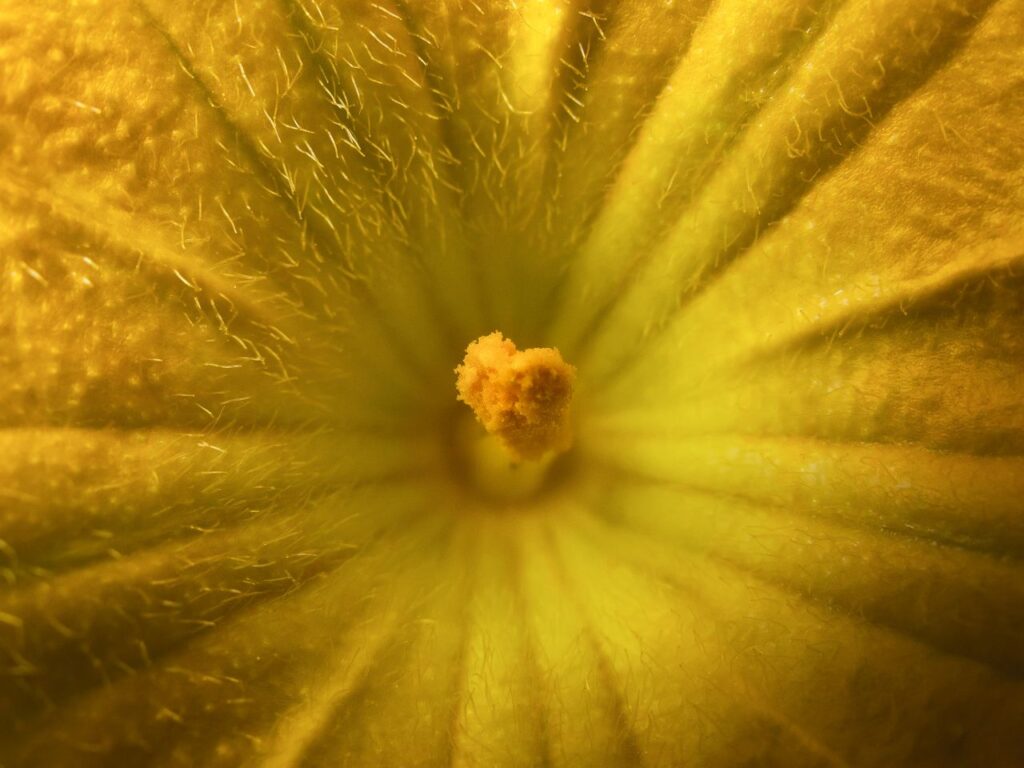
The easiest way to separate a pollination problem from a nutrient problem is to look at where the symptoms appear first.
A pollination problem usually shows up mainly around:
flowers,
fruit set,
and very young developing fruit.
The rest of the plant may still look perfectly healthy.
A nutrient problem is more likely to produce broader symptoms involving:
leaves,
new growth,
older growth,
stems,
overall vigour,
and sometimes fruit quality.
There are exceptions, and both problems can happen at the same time, but this distinction gives home gardeners a much better starting point than automatically reaching for fertiliser whenever flowers fail to become fruit.
Start with the Whole Plant
Before focusing on one dropped flower or one strange fruit, stand back and look at the entire plant.
Ask:
Are the leaves healthy and normally coloured?
Is new growth vigorous?
Is the plant growing at a reasonable rate?
Are only the flowers failing?
Or does the whole plant appear weak?
A plant with healthy green foliage, strong growth, plenty of flowers, and repeated failure to set fruit points more strongly toward pollination or environmental stress than a major nutrient deficiency.
A plant with widespread leaf symptoms and weak growth deserves a closer nutritional and root-zone assessment.
What Does a Pollination Problem Usually Look Like?
Pollination problems often occur when flowers appear normally but fruit development does not continue.
You may see:
healthy flowers that fall,
female cucumber flowers with tiny ovaries that yellow and shrivel,
pumpkin flowers opening without fruit developing,
flowers that seem normal but repeatedly fail to set,
or unusually shaped fruit after incomplete pollination.
The important clue is that the plant may otherwise look healthy.
Leaves can remain green.
Stems can remain vigorous.
The plant continues producing flowers.
The failure occurs mainly during the transition from flower to fruit.
Cucumbers and Pumpkins Give Clear Pollination Clues
Cucumbers, pumpkins, bitter gourds, bottle gourds, and related crops are particularly useful for understanding pollination problems.
Many produce separate male and female flowers.
A female flower has a swollen ovary behind the petals.
If pollination succeeds, that ovary normally continues growing.
If pollination fails, it may:
remain small,
turn yellow,
shrivel,
and fall.
If the vine itself is vigorous and healthy while this happens repeatedly, pollination should be high on your list of suspects.
Brinjal, Chillies, and Tomatoes Are Different
Brinjal, chilli, and tomato flowers contain both male and female reproductive structures.
They can generally self-pollinate, although insects, wind, or vibration may help pollen movement.
If these plants produce healthy flowers but fruit set remains poor, consider:
extreme heat,
high humidity,
poor pollen movement,
water stress,
or other flower-level problems.
Do not immediately assume the soil lacks phosphorus or potassium simply because fruit has not formed.
Malaysian Weather Can Create Pollination Problems Without Nutrient Problems
Malaysia’s tropical conditions can make diagnosis confusing.
A plant may have adequate nutrition but experience poor fruit set because of:
very high daytime temperatures,
warm nights,
persistent humidity,
heavy rainfall,
or reduced pollinator activity during storms.
For example, a cucumber vine may look extremely healthy during a wet period while female flowers repeatedly fail.
That does not automatically mean the plant needs more fertiliser.
Rain may simply be reducing pollinator visits or affecting pollen transfer.
A Successful Hand-Pollination Test Can Give You a Clue
For cucumbers, pumpkins, and many gourds, hand-pollination can be useful diagnostically.
If female flowers repeatedly fail naturally, hand-pollinate several fresh flowers correctly.
Then monitor them.
If hand-pollinated flowers begin developing normally while untreated flowers frequently fail, that strongly suggests pollination was part of the problem.
It is not a perfect scientific experiment because weather and individual flowers vary, but it can provide useful practical evidence.
What Does a Nutrient Problem Usually Look Like?
Nutrient problems often affect more than flowers.
Depending on the nutrient involved, you may see:
yellowing leaves,
pale growth,
abnormal colouring,
interveinal chlorosis,
weak stems,
poor root development,
distorted new growth,
slow growth,
or premature leaf decline.
The exact symptom depends on which nutrient is deficient, excessive, or unavailable.
That is why simply saying “yellow leaves mean nutrient deficiency” is not enough.
Yellowing can also come from:
overwatering,
root disease,
ageing leaves,
poor drainage,
or other stress.
Which Leaves Are Affected Matters
One useful diagnostic clue is whether symptoms begin on older leaves or newer leaves.
Some nutrients are relatively mobile within the plant.
When supply is limited, the plant can move them from older leaves toward younger growth.
Deficiency symptoms may therefore appear first on older leaves.
Nitrogen and magnesium are examples.
Other nutrients are less mobile.
Their deficiency symptoms may appear more strongly on newer growth.
Iron and calcium-related problems often show this pattern, although actual diagnosis still depends on the full symptom set and growing conditions.
This is far more informative than simply seeing a yellow leaf and adding a general fertiliser.
Nitrogen Deficiency Looks Very Different from Poor Pollination
Nitrogen deficiency commonly causes older leaves to become progressively pale or yellow while plant growth slows.
The whole plant may look weaker.
That is very different from a vigorous cucumber vine with dark green leaves and female flowers that fail after opening.
If the leaves look normal but fruit set fails, nitrogen deficiency is unlikely to be the first explanation.
Too Much Nitrogen Can Also Reduce Fruiting
This is where diagnosis becomes more interesting.
A nutrient problem does not always mean too little nutrition.
Excess nitrogen can produce:
very lush foliage,
large dark-green leaves,
rapid soft growth,
but disappointing flowering or fruit production.
A plant like this may look spectacular.
The gardener may assume it needs even more feeding because fruit is lacking.
That can make the imbalance worse.
If your plant is extremely leafy and vigorous but reluctant to fruit, review fertilisation before adding anything else.
Potassium Deficiency Should Not Be Diagnosed from Small Fruit Alone
Potassium plays important roles in water regulation, plant metabolism, and fruit development.
But small fruit does not automatically mean potassium deficiency.
Fruit size may also be limited by:
genetics,
root restriction,
heavy fruit load,
insufficient light,
water stress,
or heat.
A nutrient diagnosis should normally consider foliage symptoms, growing conditions, fertiliser history, and ideally soil or growing-medium information.
Do not treat potassium as a universal “fruit booster.”
Phosphorus Is Not a Magic Flowering Fertiliser
Gardeners are often told to add more phosphorus whenever plants fail to flower or fruit.
Plants certainly need phosphorus.
But healthy garden soil may already contain enough.
Poor fruit set from failed pollination will not be corrected by adding excessive phosphorus.
Too much of one nutrient can also interfere with the availability of others.
Use fertiliser according to actual plant needs rather than following the idea that “more phosphorus equals more flowers.”
Blossom-End Rot Is a Good Example of Misdiagnosis
Tomatoes, chillies, and brinjal can develop a dark sunken patch at the blossom end of the fruit.
This is known as blossom-end rot.
Gardeners often treat it as straightforward calcium deficiency and immediately add calcium products.
The disorder involves inadequate calcium reaching developing fruit tissue, but that can happen even when calcium exists in the soil.
Irregular watering, damaged roots, excessive salts, and rapid growth can interfere with calcium movement.
This is a nutrient-related physiological problem, but the solution may be better root-zone and moisture management rather than simply adding calcium.
This shows why diagnosis matters.
Pollination Problems Usually Affect Fruit Set More Than Leaf Colour
A practical rule is:
If leaves, stems, and new growth look healthy but flowers repeatedly fail to become fruit, investigate pollination and environmental conditions first.
If flowers fail and the plant has obvious abnormal leaf or growth symptoms, investigate the whole plant.
You may be dealing with:
nutrition,
root health,
water stress,
disease,
or several factors together.
Nutrient Problems Can Indirectly Cause Flower Drop
The distinction is not always perfect.
A severely nutrient-deficient plant may become too weak to retain flowers.
Likewise, excessive fertilisation can stress roots or encourage excessive foliage.
So nutrient problems can certainly affect fruit set.
The difference is that there are usually other clues beyond the flowers themselves.
Look for symptoms across the plant.
Watering Can Mimic Both Problems
Water stress complicates diagnosis.
A plant experiencing drought may:
drop flowers,
develop small fruit,
show leaf wilting,
and absorb nutrients poorly.
A waterlogged plant may:
yellow,
grow slowly,
lose flowers,
and display symptoms that resemble nutrient deficiency.
Before adding fertiliser, check the root zone.
If the soil is constantly saturated or repeatedly bone dry, correct watering first.
Healthy roots are required for both nutrient uptake and fruit production.
Soil pH Can Cause Nutrient Problems Even When Fertiliser Is Present
Nutrients can exist in the soil but remain less available when soil pH is unsuitable.
This means adding more fertiliser may not solve the problem.
If several deficiency-like symptoms persist despite appropriate feeding, checking soil pH can be useful.
Do not try to dramatically change pH based on guesswork.
Test first.
Root Damage Can Look Like Nutrient Deficiency
Roots are the plant’s nutrient and water uptake system.
If roots are damaged by:
waterlogging,
root rot,
severe compaction,
or physical injury,
the plant may show yellowing or deficiency-like symptoms even when nutrients are present in the soil.
This is why fertilising a plant with damaged roots can be ineffective or even harmful.
Always include root-zone conditions in your diagnosis.
Pest Damage Can Also Confuse the Picture
Thrips, mites, aphids, whiteflies, and other pests can cause:
distorted growth,
flower damage,
scarring,
yellowing,
or poor fruit set.
A gardener may mistake these symptoms for nutrition problems.
Inspect leaves and flowers closely.
If pests are present, identify them before applying fertiliser or pesticide.
Treating the wrong problem wastes time and may stress the plant further.
Use the Pattern, Not One Symptom
A good garden diagnosis combines several clues.
For example:
Pattern A
Healthy green cucumber vine
Plenty of flowers
Female ovaries repeatedly yellow after flowering
Heavy rain and few bee visits
More likely: pollination problem.
Pattern B
Chilli plant with pale older leaves
Slow growth
Small canopy
Few flowers and poor fruit development
More likely: nutritional, root-zone, or general plant-health problem.
Pattern C
Tomato with extremely dark, lush foliage
Rapid leafy growth
Few fruits
Recent heavy nitrogen feeding
More likely: nutritional imbalance rather than failed pollination alone.
Patterns are much more useful than isolated symptoms.
A Simple Diagnostic Sequence
When fruit set is poor, follow this order.
1. Check the Type of Flower
Does the crop have separate male and female flowers?
Are both present?
2. Check Whether Pollination Could Be Failing
Are female flowers opening but fruit failing immediately afterwards?
Have pollinators been active?
Has there been persistent rain?
3. Look at the Leaves
Are they normally coloured and shaped?
Are symptoms affecting old leaves, new leaves, or the whole plant?
4. Check Watering and Drainage
Is the root zone too dry or too wet?
5. Review Fertiliser History
What have you already applied?
How often?
At what rate?
6. Inspect for Pests and Disease
Look closely at flowers, growing tips, leaves, and stems.
7. Consider Light and Heat
Does the plant receive enough sunlight?
Is it exposed to severe reflected heat?
This sequence prevents unnecessary fertiliser applications.
Do Not Diagnose from Social-Media Photos Alone
Online charts showing:
“yellow leaf = nitrogen”
“purple leaf = phosphorus”
“brown edge = potassium”
can be useful as rough educational tools, but real plants are more complicated.
Water stress, pests, disease, pH, root problems, and natural ageing can produce similar symptoms.
Use symptom charts as clues, not proof.
A confident nutrient diagnosis based on one leaf colour is often unreliable.
Soil Testing Can Help When the Problem Persists
If an important garden bed repeatedly performs poorly, a soil test can provide useful information.
Depending on the test, you may learn about:
pH,
nutrient levels,
salinity,
or other characteristics.
This is particularly useful before repeatedly applying specialised amendments.
For home gardeners, you do not need laboratory testing for every minor problem.
But persistent unexplained deficiencies deserve more evidence than guesswork.
Avoid Random Micronutrient Supplements
Micronutrients such as:
iron,
boron,
zinc,
manganese,
and others
are required in relatively small amounts.
More is not automatically better.
Some can become toxic when overapplied.
Do not use micronutrient products simply because fruit set is poor.
Apply them only when there is a reasonable basis and according to appropriate product directions.
Fix Pollination Problems with Pollination Solutions
If pollination is the likely problem, focus on:
supporting pollinating insects,
growing suitable flowering plants,
avoiding unnecessary insecticide use around flowers,
hand-pollinating appropriate crops,
improving airflow,
and reducing severe plant stress.
Do not try to fertilise a bee problem away.
Fix Nutrient Problems with Evidence
If nutrition is the likely issue:
review the fertiliser programme,
check pH where relevant,
inspect root health,
consider the growing medium,
and look at which parts of the plant show symptoms.
Then choose an amendment appropriate for the identified problem.
Avoid applying several products simultaneously.
If the plant improves, you want to know what actually helped.
Change One Thing at a Time Where Possible
Home gardening becomes much easier when you treat it like a small experiment.
If you simultaneously:
add fertiliser,
change watering,
spray a pesticide,
move the pot,
and hand-pollinate
on the same day, you may never know what solved the problem.
Where the plant is not in immediate danger, make targeted changes and observe the response.
Watch the Next Flowers, Not the Ones Already Lost
Once a flower has dropped, it cannot recover.
If you improve pollination or correct a nutritional problem, judge the results from:
new leaves,
new flowers,
and new fruit.
Give the plant time to respond.
The next growth cycle tells you whether the diagnosis was correct.
A Quick Pollination vs Nutrient Checklist
A pollination problem is more likely when:
the plant otherwise looks healthy,
flowers appear normally,
female flowers repeatedly fail to develop,
tiny cucumbers or pumpkins abort soon after flowering,
weather has reduced pollinator activity,
or hand-pollinated flowers succeed more often.
A nutrient or root-zone problem is more likely when:
leaves show widespread abnormal colour or pattern,
new growth is distorted or unusually weak,
overall plant growth is poor,
multiple plant functions are affected,
fertiliser history suggests deficiency or excess,
or soil and root conditions are poor.
And remember: both problems can occur together.
Diagnosis Before Treatment
The most important habit is to stop treating fruiting problems automatically.
A fallen flower is not automatically potassium deficiency.
A small fruit is not automatically calcium deficiency.
A yellow leaf is not automatically nitrogen deficiency.
Look at:
the crop,
the flowers,
the foliage,
the root zone,
the weather,
the fertiliser history,
and the timing of symptoms.
That complete picture is what leads to better decisions.
At the end of the day, pollination problems usually reveal themselves at the flower-to-fruit stage, while nutrient problems more often leave clues across the plant’s leaves, growth, roots, and overall vigour. Malaysian heat, humidity, tropical rain, container growing, and urban microclimates can complicate the picture, so avoid diagnosing from one symptom alone. Check pollination, water, roots, light, pests, and fertiliser history before adding another product. The better you become at reading the whole plant, the less often you will treat the wrong problem — and the more useful every growing cycle becomes.
Got a plant that is flowering but refusing to fruit, or leaves that make you wonder whether nutrition is the real issue? Share clear photos of the flowers, foliage, fruit, and overall plant and tag @projectharvest.my on Instagram. Tell us what you have already tried too — real Malaysian garden examples are one of the best ways to learn how to separate pollination problems from nutrient problems before reaching for another fertiliser bottle.