
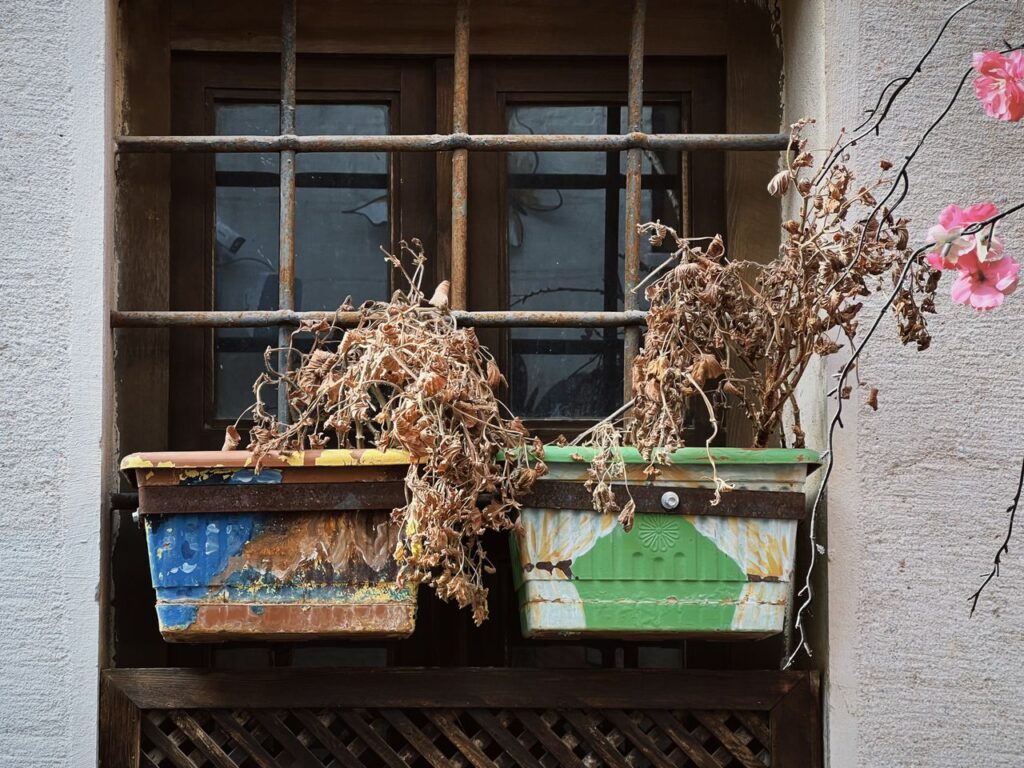
Container plants can dry out much faster than plants growing directly in the ground. During hot Malaysian weather, a small pot that was comfortably moist in the morning may already be dry by late afternoon.
This happens because containers hold a limited volume of growing medium while their sides are exposed to warm air and, often, direct sunlight. As plants grow larger, their roots also draw more water from that same limited reservoir.
The solution is not simply to keep pouring more water onto the pot.
You can make containers hold useful moisture for longer by changing how you water, what you grow them in, where you place them, and how exposed the soil and container are to heat.
Start with a Large Enough Container
One of the easiest ways to reduce rapid drying is to use a pot that is appropriate for the size of the plant.
Small pots contain less growing medium.
Less growing medium means less stored water.
A mature chilli plant growing in a tiny nursery pot may need watering far more frequently than the same plant growing in a properly sized container.
Large vegetables such as tomatoes, brinjal, chillies, cucumbers, and some fruit plants generally benefit from larger containers as they mature.
Do not automatically choose the biggest pot you can find, but make sure the root system has enough growing volume.
If a container repeatedly dries within hours despite proper watering, the plant may simply have outgrown it.
Mulch the Surface
Mulch is one of the simplest ways to slow water loss.
Bare potting mix is directly exposed to sunlight and moving air.
A layer of suitable organic mulch creates a protective barrier over the surface.
Materials may include dried leaves, suitable bark, straw-like plant material, or other clean organic matter.
Apply a moderate layer while leaving a small space around the main stem.
Do not pile wet mulch directly against chilli stems, herb crowns, or tree trunks.
Besides reducing evaporation, mulch can also moderate surface temperature and protect the growing medium from intense rainfall.
Water Thoroughly Instead of Giving Tiny Splashes
A small splash may wet only the upper centimetres of a pot.
That surface moisture can disappear quickly under hot sun.
Instead, water slowly enough to moisten the full root ball.
For a normal free-draining container, some water should eventually emerge through the drainage holes.
Then allow the plant to use that stored moisture before watering again.
This creates a larger reserve of water for the root system than repeatedly wetting only the surface.
If water immediately rushes out of the drainage holes while the centre stays dry, the mix may have become hydrophobic and needs to be rehydrated gradually.
Water During the Cooler Part of the Day
When practical, watering in the morning works well for many Malaysian container gardens.
The plant begins the hotter part of the day with access to moisture, while less water is immediately lost compared with watering under intense midday heat.
This does not mean plants can never be watered at another time.
If a container is genuinely dry and the plant is stressed, water it rather than waiting hours for the “perfect” watering time.
Plant need matters more than rigid gardening rules.
Protect Pots from Harsh Afternoon Sun
A plant may need full sun, but that does not necessarily mean the container itself needs to bake in direct sun all afternoon.
Pot walls can heat the root zone.
Dark-coloured containers can become particularly warm.
Where possible, position pots so the plant receives the light it needs while the container receives some protection from the strongest afternoon sun.
You can also shade the sides of pots using surrounding plants, suitable screens, or thoughtful positioning.
Avoid suddenly moving sun-loving vegetables into deep shade simply to save water.
The goal is to reduce excessive root-zone heating without sacrificing the light required for good growth.
Group Pots Together
Scattered pots have warm air moving around every side.
Grouping containers can create a slightly more sheltered environment.
Larger pots can shade smaller ones.
Plants themselves can reduce direct sunlight on neighbouring containers.
This can be particularly useful on balconies and paved terrace-house areas where reflected heat contributes to rapid drying.
However, avoid packing foliage so tightly that airflow disappears.
Malaysia’s humidity means overcrowded plants can become more vulnerable to fungal problems.
Group the containers while still leaving sensible space between the leaves.
Wind Can Dry Pots Surprisingly Fast
Heat is not the only problem.
Wind increases evaporation from the soil surface and water loss through plant leaves.
This is especially relevant on exposed balconies, rooftops, and high-rise gardens.
If containers constantly dry faster than expected despite moderate temperatures, observe how windy the location is.
A permeable windbreak, railing screen, taller plant grouping, or slightly more sheltered placement can reduce extreme airflow.
Avoid completely enclosing the plants.
You want to reduce strong drying winds while maintaining healthy ventilation.
Improve the Potting Mix
Some potting mixes simply do not hold enough water.
A very coarse mix may drain beautifully but require constant irrigation.
Adding appropriate moisture-retentive ingredients can improve the balance.
Cocopeat, finished compost in moderation, and other suitable organic components can help increase moisture retention.
But be careful.
The answer is not to create a dense mix that stays waterlogged.
Container roots require oxygen, so a good mix needs to hold both water and air.
If you are adjusting an existing mix, make changes gradually and observe drainage.
Old Potting Mix May Need Refreshing
Even a good growing medium changes over time.
Organic components decompose, particles settle, and the root system expands.
Old mix may become compacted or shrink away from the container walls.
Sometimes it becomes water-repellent after drying severely.
If your potting mix behaves badly no matter how carefully you water, it may need refreshing.
Remove the plant when appropriate, inspect the roots, replace part of the degraded medium, and restore the mix with fresh structural components.
Improving the growing medium may reduce water stress more effectively than increasing irrigation.
Self-Watering Pots Can Help
Self-watering containers store water beneath the root zone in a reservoir.
Moisture then moves upward through the growing medium as needed.
For herbs and vegetables that prefer fairly consistent moisture, this can reduce the risk of severe drying during hot days.
They can be particularly useful for:
mint,
basil,
chillies,
leafy vegetables,
tomatoes,
and other thirsty container crops.
However, the reservoir still needs refilling, drainage and overflow must work properly, and mosquito access must be prevented.
Self-watering does not mean zero maintenance.
Drip Irrigation Is Another Option
If you have many pots, hand watering may become difficult during hot weather.
A drip-irrigation system can deliver water slowly to each container.
This is particularly useful when connected to a timer.
But check that each emitter is delivering enough water and that moisture spreads throughout the root ball.
One dripper placed in the corner of a very large container may leave other areas dry.
Large pots may require multiple emitters.
Automatic watering should still be adjusted during rainy periods.
Double-Potting Can Reduce Heat
For particularly exposed containers, placing the growing pot inside a slightly larger decorative or protective outer pot can reduce direct solar heating of the root zone.
Leave enough space between the pots for airflow.
Do not allow the outer container to trap water and turn into a permanent reservoir unless the system is specifically designed that way.
A simple air gap can help protect roots from the extreme heat experienced by an exposed pot wall.
Be Careful with Terracotta
Unglazed terracotta pots look beautiful and provide good gas exchange, but their porous walls also allow water to evaporate through the container itself.
That can make them dry faster than plastic or glazed containers.
For plants that dislike staying wet, this can be useful.
For thirsty vegetables under Malaysian sun, it may create extra watering work.
You do not need to avoid terracotta entirely.
Just understand that the container material affects the watering schedule.
Do Not Block the Drainage Holes
Trying to save water by preventing drainage is a bad trade.
Containers need drainage holes so excess water can escape.
Without them, heavy watering or a Malaysian thunderstorm can leave roots sitting in stagnant water.
The goal is to slow unnecessary water loss while still allowing excess water to drain.
Use better soil, mulch, larger pots, shade, or reservoir-based systems rather than turning an ordinary container into a bucket.
Watch for Root-Bound Plants
A pot packed with roots may dry extraordinarily quickly.
There is simply very little growing medium left to store moisture.
Roots may circle the container wall and form a dense mat.
If an established plant suddenly begins requiring far more frequent watering than before, root crowding may be part of the reason.
Check whether it needs a larger container.
Repotting into an appropriately sized pot can immediately increase the volume of available moisture.
Fertiliser Does Not Solve Water Stress
A plant wilting in a dry container does not need extra fertiliser.
In fact, applying concentrated fertiliser to dry growing medium can increase root stress.
Restore moisture first.
Then continue the normal feeding programme once the plant has recovered.
Keep in mind that repeated fertiliser applications can also cause salts to accumulate in containers over time.
Good watering and nutrition are related, but one cannot replace the other.
Check More Often During Heatwaves
There is no universal rule that says a pot should be watered every one, two, or three days.
During particularly hot weather, inspect containers more frequently.
Small pots may need daily attention.
Large, mulched containers may last considerably longer.
Push a finger into the growing medium or use a wooden stick to check below the dry surface.
You are not necessarily watering every time you check.
You are using the check to learn how quickly each container is losing moisture.
A Simple Hot-Weather Strategy
If your pots are drying too quickly, work through the problem in this order.
First, check whether the container is large enough.
Then check whether the growing medium absorbs and stores moisture properly.
Water deeply.
Add suitable mulch.
Reduce unnecessary afternoon heating.
Protect extremely exposed pots from strong wind.
Consider self-watering containers or drip irrigation if daily watering is becoming impractical.
Making several small improvements together usually works much better than looking for one miracle product.
At the end of the day, reducing water loss from containers in hot weather is about creating a larger and more stable moisture reserve around the roots. Use appropriately sized pots, water the full root zone, protect the surface with mulch, reduce extreme pot heating, maintain a well-balanced growing mix, and account for wind as well as sunlight. Malaysia’s heat will always make container gardening more water-intensive than growing directly in the ground, but the right setup can make the difference between a pot that dries by lunch and one that stays comfortably moist much longer.
Do your pots seem to dry almost as soon as you finish watering them? Tag @projectharvest.my on Instagram and show us your mulch, larger containers, shade setup, self-watering system, or the changes that finally helped your plants stay hydrated through a hot Malaysian day. Your solution might save another container gardener from making three trips outside with a watering can before dinner.