
A pot can dry surprisingly quickly even when the weather does not feel extremely hot.
The reason may be wind.
Moving air speeds up water loss from both the potting mix and the plant itself. On an exposed Malaysian balcony, rooftop, car porch, or open terrace, a windy day can make containers dry much faster than identical pots sitting in a sheltered backyard.
This is why two plants receiving the same amount of sunlight may still need completely different watering schedules.
Wind changes the microclimate around the plant.
Wind Increases Evaporation from the Soil
When water evaporates from the surface of potting mix, the air immediately above the soil becomes more humid.
If the air remains still, that small layer of humid air can slow further evaporation.
Wind removes it.
Fresh, drier air continually replaces the humid air near the surface, allowing more water to evaporate.
The stronger and more consistent the airflow, the faster this process can become.
This is especially noticeable in containers because they already hold a limited amount of water compared with garden soil.
Plants Lose More Water Too
Plants also release water through tiny openings in their leaves called stomata.
This process is called transpiration.
Wind removes the humid boundary layer that naturally forms around leaves, which can increase the rate at which water vapour moves away from the plant.
The roots then need to replace that lost moisture.
If the potting mix cannot supply water quickly enough, the plant may begin to wilt.
That means wind can dry a plant in two ways at the same time:
the soil loses water faster,
and the leaves lose water faster.
Balconies Can Be Especially Dry
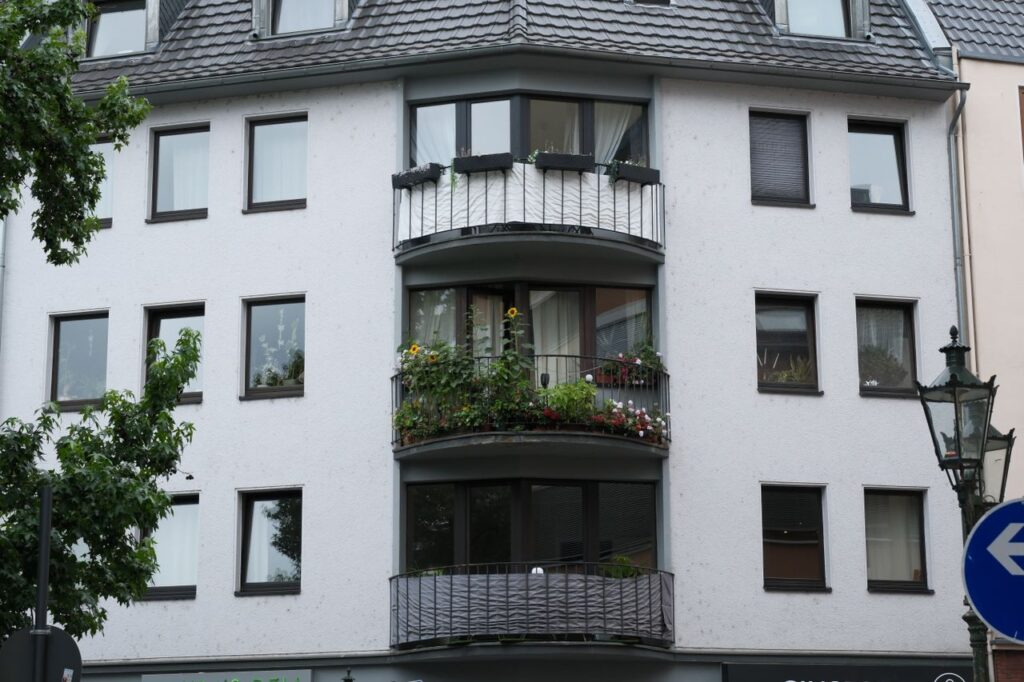
High-rise balconies are a good example.
A balcony may receive only moderate sun, yet containers still dry very quickly because wind moves through the space throughout the day.
Buildings can also funnel airflow between walls, making certain corners much windier than the general weather conditions suggest.
This means an app showing moderate temperature does not necessarily tell you how stressful conditions are for your balcony plants.
Observe the actual location.
If leaves are moving continuously and lightweight pots frequently shift or tip, wind is likely playing a major role in moisture loss.
Small Pots Are Most Vulnerable
Small containers dry faster even without wind.
Add strong airflow and the problem becomes more severe.
A small herb pot may contain only a few litres of growing medium.
Once that water reserve is used, the plant has nowhere else to find moisture.
This is why mint, basil, leafy vegetables, and young chilli plants in small nursery pots may wilt much faster on windy balconies.
Moving them into appropriately larger containers can dramatically reduce how quickly the root zone dries.
Terracotta Pots Can Dry Even Faster
Unglazed terracotta allows water to evaporate through its porous walls.
This can be helpful for plants that dislike constantly wet soil.
But when combined with strong wind, moisture can be lost from both the soil surface and the sides of the pot.
If you grow thirsty vegetables in terracotta containers in an exposed location, expect to check them more frequently.
Plastic, glazed ceramic, or other less porous containers may retain moisture longer.
Pot material is part of the watering equation.
Wind and Heat Together Can Be Tough on Plants
A hot day is already demanding.
A hot and windy day can be much more stressful.
Higher temperature increases evaporation and plant water use, while wind continually removes humid air from around the leaves and soil.
This combination can make a pot that normally lasts two days between watering become dry within one day.
During these conditions, monitor containers rather than relying on your normal watering schedule.
The plant’s needs have changed even though the pot has not.
Check Soil Deeper Than the Surface
Wind can dry the upper soil layer very quickly.
This can tempt you to water every time the surface looks pale and dry.
But deeper soil may still contain enough moisture.
Push your finger several centimetres into the potting mix or use a wooden stick.
If the soil underneath is still moist, watering immediately may not be necessary.
The goal is to respond to the root zone, not just the surface.
Use Mulch to Slow Surface Drying
Mulch is one of the simplest ways to reduce moisture loss caused by wind.
A layer of suitable organic mulch protects the potting mix from direct airflow.
Dry leaves, bark, or other appropriate materials can work well.
Mulch also reduces evaporation from heat and protects the soil surface from heavy rain.
Keep the mulch slightly away from the plant’s main stem.
Even a modest layer can help large containers retain moisture for longer.
Create a Windbreak — But Do Not Block All Airflow
If your garden is extremely exposed, consider reducing the strongest wind.
A permeable windbreak is usually better than a completely solid wall.
Shade netting, slatted screens, balcony mesh, taller plants, or other partially open barriers can slow airflow without eliminating ventilation.
This matters in Malaysia because plants still benefit from good airflow.
A completely enclosed humid garden can increase the risk of fungal problems.
The aim is not to create still air.
It is to reduce harsh, drying wind.
Group Pots Strategically
Grouping containers can create a more protected microclimate.
Larger pots can shelter smaller ones.
Plants can break up airflow before it reaches more sensitive herbs or seedlings.
This can also slightly increase humidity between containers.
However, avoid packing foliage too closely.
Leave enough space for healthy air movement.
You want shelter, not overcrowding.
Position Thirstier Plants in More Sheltered Areas
Not every plant needs the same exposure.
If one corner of your balcony receives strong wind all day, reserve it for tougher plants that tolerate faster drying.
Place moisture-loving herbs and leafy vegetables in a more protected position.
This is an example of using the garden’s microclimate instead of fighting it.
Sometimes moving a pot one metre closer to a wall can reduce water loss more effectively than increasing watering frequency.
Drip Irrigation Can Help
For a large collection of exposed pots, drip irrigation can provide more consistent moisture.
Emitters deliver water slowly to the root zone, reducing the risk of plants drying severely between hand-watering sessions.
However, do not simply increase irrigation because the garden is windy.
Check how quickly the root zone actually dries.
Adjust the timer or emitter flow only when the soil shows that more water is genuinely needed.
Automation should respond to conditions.
Self-Watering Pots Are Useful Too
Self-watering containers can help because they store water below the growing medium.
As the upper soil dries, moisture moves upward from the reservoir.
For windy balconies, this provides a buffer against rapid drying.
The reservoir still needs monitoring, especially during hot, windy weather when mature plants may consume water quickly.
Self-watering does not mean the container can be forgotten indefinitely.
Watch for Physical Wind Damage
Wind does more than remove water.
Tall chillies, tomatoes, brinjal, and fruiting plants may sway constantly.
Branches can snap.
Leaves can tear.
Roots may shift inside loose potting mix.
Use stakes or suitable supports where necessary.
Heavy containers or secure pot placement may also be important on exposed balconies.
A plant already stressed by physical wind damage may struggle even more when the soil dries quickly.
Adjust Watering as the Plant Grows
A small chilli plant may cope well in a windy location early in the season.
Months later, the same plant has far more leaves.
More leaf area means more potential water loss through transpiration.
At the same time, its roots may have filled the container.
This can make the pot dry dramatically faster.
Do not assume a watering routine that worked when the plant was young will still work at maturity.
Reassess regularly.
Learn Your Garden’s Wind Zones
Walk around your garden at different times of day.
Some areas may be sheltered in the morning but exposed in the afternoon.
Others may receive strong airflow only when wind comes from a particular direction.
You may discover three different zones:
very exposed,
moderately breezy,
and sheltered.
Once you recognise them, plant placement becomes much easier.
Moisture-loving crops can go into sheltered zones, while tougher plants can occupy the windier areas.
A Simple Windy-Weather Strategy
If your pots are drying too quickly because of wind:
check whether they are large enough,
water the full root zone,
add mulch,
group containers strategically,
move sensitive plants into more sheltered positions,
use a permeable windbreak where needed,
and consider drip irrigation or self-watering systems if constant hand watering becomes impractical.
Most importantly, keep checking below the surface before adding more water.
Wind can dry the top of a pot long before the deeper root zone is empty.
At the end of the day, wind can change a container garden much more than many gardeners realise. It increases evaporation from the soil, increases water loss from leaves, and can make small exposed pots dry far faster than sheltered ones. Instead of simply watering more often, reduce unnecessary exposure, use appropriately sized containers, protect the surface with mulch, and design your garden around its natural wind patterns. Once you understand where the driest areas are, watering becomes much easier to manage.
Is one side of your balcony or garden always drying out faster than the rest? Tag @projectharvest.my on Instagram and show us your windy corner, windbreak, grouped pots, container setup, or the changes that helped your plants hold moisture longer. Your microclimate experiment could help another Malaysian gardener realise that sometimes the watering problem is not the sun — it is the air moving around the pot.