
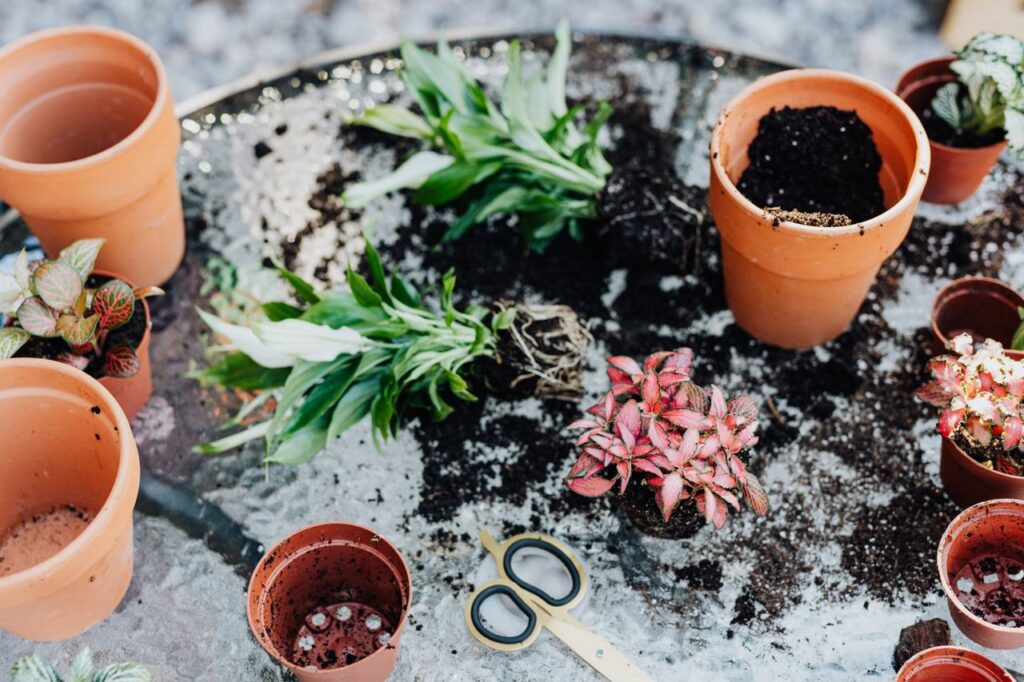
When a chilli, tomato, herb, or other container plant reaches the end of its life, it can be tempting to empty the entire pot into the rubbish bin and start again with a fresh bag of potting mix.
But old potting mix is not automatically useless.
In many cases, it can be refreshed and reused by removing old roots, restoring structure, adding some fresh organic matter, and replacing nutrients that previous plants have used.
This can save money, reduce waste, and make container gardening more sustainable.
The important part is knowing when reuse is sensible — and when the safest option is to start fresh.
Why Does Potting Mix Wear Out?
Potting mix changes over time.
Organic components such as composted bark, cocopeat, and other plant-based materials gradually break down. As they decompose, the mix may become finer and denser.
The large air spaces that once allowed roots to breathe can shrink.
At the same time, plants remove nutrients as they grow.
Repeated watering can also wash some nutrients from the container while leaving certain mineral salts behind.
You may eventually notice that an old pot:
drains more slowly,
stays wet for too long,
shrinks away from the sides,
becomes difficult to rehydrate,
or feels much denser than when it was new.
That does not always mean you have to throw it away.
It means the potting mix needs attention.
Start by Removing the Old Plant and Roots
Once the previous crop is finished, remove the plant and as much of the old root system as practical.
Shake usable potting mix away from the roots rather than throwing everything out together.
Small fine roots can remain and eventually decompose, but remove large root balls, thick stems, weeds, and obvious undecomposed plant material.
Breaking up the mix at this stage also lets you see what condition it is in.
Does it still feel loose and crumbly?
Or has it become dense, sticky, powdery, or compacted?
That will help determine how much refreshing it needs.
Check Why the Previous Plant Died
This step is extremely important.
If the previous plant simply reached the end of its productive life, old potting mix is usually much easier to reuse.
But if the plant died from a serious soil-borne disease, root rot, unexplained wilt, nematodes, or a heavy pest infestation, reusing that mix immediately for another susceptible crop may carry the problem forward.
For example, if a tomato suddenly collapsed with an uncertain root disease, planting another tomato straight into the same untreated medium is not a sensible experiment.
When disease is strongly suspected and you cannot confidently identify or manage it, replacing the growing medium may be safer.
Do not let the desire to save one bag of potting mix create months of plant-health problems.
Remove Pest Problems First
Inspect the old mix carefully.
Look for root mealybugs, fungus gnat larvae, ants, beetle larvae, unusual eggs, or other pests.
A few harmless soil organisms are normal.
A major infestation is different.
If the container had a serious pest problem, deal with it before reusing the medium.
Simply mixing infested soil into fresh potting mix spreads the problem across a larger volume.
Also clean the pot itself before replanting, especially if pests or disease were involved.
Restore the Structure
Old potting mix often needs more than nutrients.
It needs air space.
Fresh commercial mixes usually contain materials designed to hold moisture while still allowing drainage and oxygen around roots.
As these components break down, the mix becomes finer.
To restore structure, combine the old potting mix with some fresh potting mix and, where appropriate, a coarse aeration material such as perlite, pumice, rice-husk-based material intended for horticultural use, or another suitable product.
The exact proportion depends on how degraded the old mix has become.
If it still looks fairly good, you may only need a modest addition.
If it has collapsed into a dense mass, replacing a larger percentage makes sense.
The goal is not to follow a magical ratio.
The goal is to rebuild a mixture that drains well while still holding enough moisture for the plant.
Add Compost — But Not Too Much
Finished compost can help refresh old potting mix by adding organic matter and some nutrients.
However, do not turn the entire container into compost.
For most potting mixes, compost should remain one component of the overall medium.
A modest amount — often around 10 to 20% of the refreshed mix — is a reasonable starting point, depending on how much compost is already present in the other ingredients.
If you are also adding vermicompost, manure-based compost, or organic fertiliser, take those nutrient sources into account.
More organic material does not automatically mean a healthier pot.
Vermicompost Can Be Useful Too
Vermicompost can be added in smaller amounts as part of the refresh.
Because worm castings are fine-textured and biologically active, they work well as a supplement rather than a bulk replacement for the old mix.
You might combine old potting mix with:
fresh potting mix,
a modest amount of finished compost,
a smaller amount of vermicompost,
and a suitable aeration material.
This creates a more balanced refreshed medium than simply adding a large scoop of fertiliser to exhausted soil.
What About Nutrients?
Previous plants have already removed nutrients from the mix, so refreshing physical structure alone may not be enough.
A new crop will eventually need nutrition.
You can incorporate an appropriate slow-release fertiliser according to the manufacturer’s instructions, or begin a suitable feeding programme after planting.
Do not guess that old soil needs a huge dose simply because it has been used before.
If you have repeatedly added fertiliser over the previous growing cycle, the opposite problem may exist: salt accumulation.
This is especially possible in containers because roots are confined to a small volume of soil.
Flush Excess Fertiliser Salts
If the previous crop was heavily fertilised, you may notice a whitish crust around the pot rim or soil surface.
That can indicate accumulated soluble salts.
Before reusing the medium, placing it in a well-draining container and watering thoroughly several times can help wash some excess soluble salts through.
Make sure the water can drain completely.
Do not do this in a container with blocked drainage holes.
In Malaysia, rain can sometimes perform this flushing naturally for outdoor pots, but relying on uncontrolled heavy rain is not ideal because saturated media may remain waterlogged.
What If the Potting Mix Has Become Water-Repellent?
Old peat- or coir-containing potting mixes can sometimes become extremely dry and difficult to wet again.
Water may run down the sides of the pot while the centre remains dry.
If this happens, do not immediately assume the mix is ruined.
Break it apart gently and rehydrate it slowly.
Adding water in stages and mixing between applications can help moisture penetrate the dried material.
Once properly rehydrated, you can assess whether the structure is still good enough to reuse.
If it instantly collapses into dense mud after wetting, however, it may need a substantial amount of fresh structural material.
Should You Sterilise Old Potting Mix?
Home gardeners sometimes try to sterilise soil by baking it, pouring boiling water through it, or leaving it under plastic in the sun.
These methods are not always necessary and can be messy, inconsistent, or potentially unsafe.
Heat treatment can kill beneficial organisms as well as harmful ones, and heating soil or organic potting mixes indoors can produce unpleasant odours.
For ordinary healthy used potting mix, sterilisation is usually unnecessary.
If serious disease contamination is suspected, replacing the mix or using it for a different non-sensitive purpose may be simpler than trying to sterilise it perfectly at home.
Rotate What You Grow
If you are reusing container mix, changing the next crop can sometimes be sensible.
For example, instead of immediately growing another tomato after a tomato crop, you might use the refreshed mix for herbs or leafy vegetables — provided the previous plant was healthy and there is no disease concern.
Crop rotation does not eliminate every container problem, but it can reduce repeated pressure from crop-specific pests and nutrient demands.
For small Malaysian gardens, even simple rotation between leafy vegetables, herbs, fruiting crops, and ornamental plants can be useful.
Do Not Reuse Potting Mix Forever Without Renewal
Old potting mix can be refreshed several times, but eventually a large proportion of its original structure may break down.
If the mix becomes permanently dense, drains badly despite amendments, smells sour, or repeatedly creates root problems, it may be time to retire it from containers.
That does not necessarily mean throwing it into the rubbish.
Healthy old potting mix can be added gradually to garden beds, compost systems, or landscaping areas where drainage requirements are less demanding than inside a pot.
A growing medium that is no longer ideal for a chilli container may still contain useful organic and mineral material for the wider garden.
A Simple Refreshing Recipe
For reasonably healthy old potting mix, a practical approach is to begin with roughly:
50–70% old potting mix
20–30% fresh potting mix
10–20% finished compost
Then add a suitable amount of coarse aeration material if the mixture feels too dense.
These are not rigid percentages.
If your old mix is still light and well structured, you can reuse more of it.
If it has broken down badly, use less.
Always judge the final texture and drainage rather than following a recipe blindly.
Test the Drainage Before Planting
Once you have refreshed the mix, fill the container and water it thoroughly before planting.
Watch what happens.
Water should move through the medium rather than remaining pooled on the surface for a long time.
The pot should drain from the bottom.
At the same time, the entire mix should not become bone-dry again within a few minutes.
Adjust with fresh structural or moisture-holding ingredients if necessary.
This simple test is easier than discovering the problem after your new chilli plant has already been transplanted.
Malaysia’s Climate Makes Good Structure Especially Important
Container plants in Malaysia face two very different stresses.
During hot, sunny periods, small pots can dry rapidly.
During heavy rain, the same containers may receive more water than plants can use.
A refreshed potting mix therefore needs to strike a balance.
It should retain useful moisture without staying saturated.
That is why simply adding compost to old soil is not enough.
Structure, drainage, moisture retention, and nutrients all need to be considered together.
At the end of the day, old potting mix does not automatically belong in the bin. If the previous plant was healthy, remove old roots, inspect for pests, restore lost structure with fresh material, add a modest amount of mature compost, and replenish nutrients sensibly. Reuse what is still functioning and replace what has genuinely broken down. With a little attention, the same growing medium can often support more than one crop — saving money while reducing the amount of garden material Malaysian households throw away.
Got a pile of old potting mix sitting around after your last harvest? Give it a closer look before throwing it away. Tag @projectharvest.my on Instagram and share your refreshed potting mix, before-and-after texture, new container setup, or the second crop growing successfully in reused soil. Your experiment might help another Malaysian gardener discover that sometimes the best new potting mix starts with what they already have.