
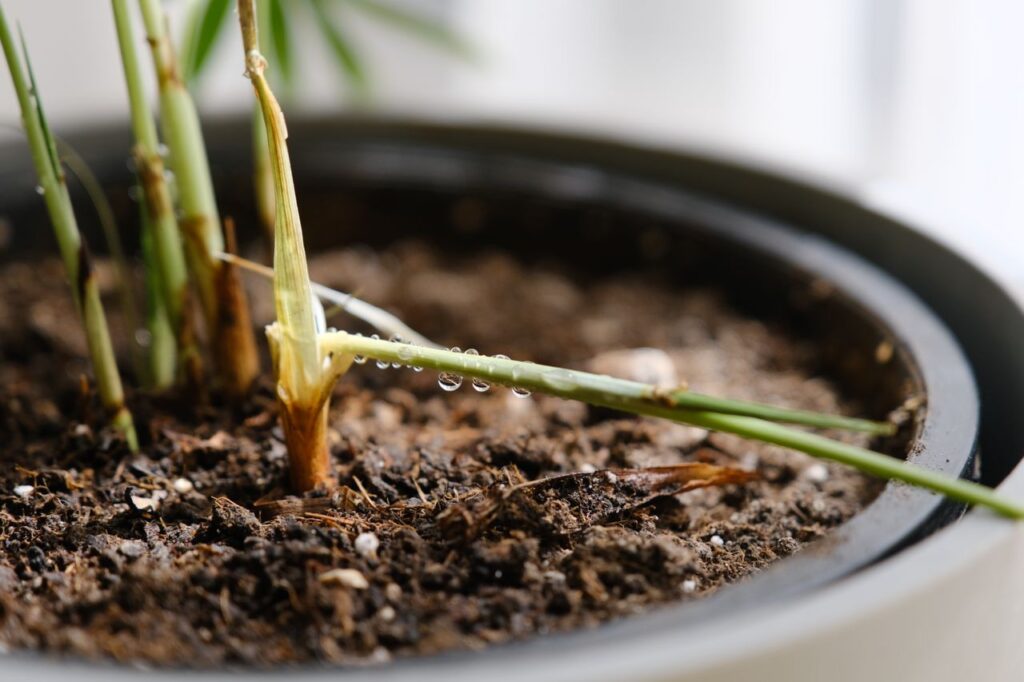
Overwatering is one of the most common mistakes beginner gardeners make, and it can be very confusing because the plant may look thirsty even when the soil is still wet. That happens because roots need oxygen as well as moisture. When soil stays waterlogged for too long, the air spaces fill with water, the roots begin to struggle, and the plant can no longer take up water properly. This is why an overwatered plant may show yellow leaves, limp growth, wilting, slow growth, or even leaf drop.
The first step is simple: stop watering for now. Do not keep adding more water just because the plant looks weak. If the potting mix is still damp or soggy, give it time. Check whether the pot has proper drainage holes and whether excess water is trapped in a tray, saucer, or decorative outer pot. Plants left standing in water are much more likely to develop root problems.
Next, improve the plant’s conditions so the root area can start drying more sensibly. Move the plant into a bright spot with decent airflow, but avoid blasting a stressed plant with harsh sun immediately. If the soil is very heavy and the plant stays wet for too long every time you water, the bigger issue may be poor drainage rather than one single watering mistake. In that case, the plant may need more than just a pause in watering.
If you suspect root rot, gently slide the plant out of the pot and inspect the roots. Healthy roots are usually firmer and lighter in colour, while badly rotted roots are often brown, mushy, slimy, or foul-smelling. If most of the roots are severely damaged, the plant may be difficult to save. But if there are still enough healthy roots left, you may be able to rescue it by trimming away the worst parts and repotting it into a clean container with a well-draining mix.
After repotting or drying out the plant, do not rush to “make up for it” with more care than necessary. No heavy feeding, no constant watering, and no panic. Let the plant settle. Watch for signs of new healthy growth, which is often the first sign recovery is happening.
At the end of the day, saving an overwatered plant is about giving the roots a chance to breathe again. Stop watering, remove trapped excess moisture, check the roots if needed, and improve drainage going forward. The sooner you catch the problem, the better the plant’s chances of bouncing back.
If you are trying to save an overwatered plant at home, we would love to see it. Tag @projectharvest.my on Instagram and share your plant rescue, your garden setup, and your gardening journey with us — your home garden might inspire another Malaysian beginner to grow with more confidence too.