
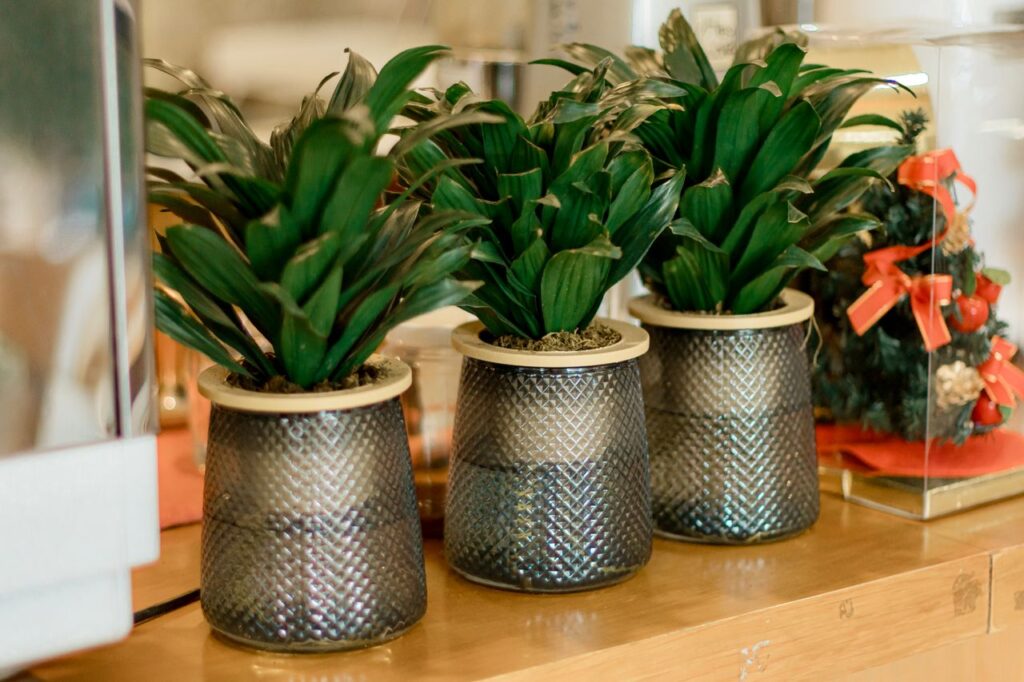
Self-watering pots can be extremely useful for Malaysian gardeners who grow herbs and vegetables in containers but find that ordinary pots dry out too quickly.
Despite the name, a self-watering pot does not magically water itself forever. Instead, it stores water in a reservoir beneath the growing medium and allows moisture to move upward into the root zone as the potting mix dries.
This creates a more consistent supply of water and can reduce the dramatic cycle of bone-dry soil followed by heavy watering.
For balconies, patios, terrace-house gardens, and sunny urban spaces, that consistency can be a major advantage.
How Does a Self-Watering Pot Work?
A typical self-watering container has two main sections.
The upper section contains the potting mix and plant roots.
The lower section acts as a water reservoir.
Part of the growing medium, or a separate wicking material, extends down towards the stored water.
Through capillary action, water moves upward through the moist material into the drier potting mix.
The plant then takes up moisture from the root zone.
As the soil dries, more water moves upward.
This allows the growing medium to regulate moisture much more gradually than a conventional pot that is watered only from above.
The Reservoir Is the Key
At the bottom of the container, you need a space where water can collect without completely submerging the entire root zone.
Commercial self-watering pots already have this chamber built in.
DIY versions often use a false bottom, internal platform, perforated container, or similar structure to create a gap beneath the growing medium.
The reservoir should hold enough water to provide useful storage while still leaving plenty of soil depth for roots.
Larger vegetables need deeper root zones than small herbs.
A self-watering container for mint can therefore be much smaller than one intended for a mature chilli or brinjal plant.
Do Not Forget the Overflow Hole
One of the most important features is the overflow hole.
This hole is positioned near the maximum water level of the reservoir.
When the reservoir becomes full, excess water escapes through the overflow instead of rising into the entire root zone.
This is particularly important in Malaysia.
A self-watering pot sitting outdoors may receive several centimetres of tropical rain in a short period.
Without an overflow outlet, the reservoir can overfill and turn the container into a waterlogged bucket.
Roots still need oxygen.
Self-watering should mean consistent moisture, not permanently submerged soil.
Add a Fill Tube
Many systems also include a vertical fill tube extending from the top of the container down into the reservoir.
This allows you to pour water directly into the storage chamber without soaking the surface every time.
The tube should remain accessible after planting.
A simple cap or cover can help stop leaves, mosquitoes, insects, and debris from entering.
In Malaysian gardens, mosquito prevention matters especially.
A well-designed reservoir should be enclosed so mosquitoes cannot easily reach standing water.
The Wicking Zone Connects Water to Soil
The reservoir cannot work if there is no reliable pathway for water to move upwards.
Commercial pots usually have built-in wicking chambers.
For a DIY container, part of the potting medium may extend through holes in the false bottom into the reservoir area.
Some designs use separate wicks made from suitable absorbent material.
Whatever method you choose, the wick must remain in contact with both the stored water and the growing medium.
If there is an air gap between them, capillary movement may stop.
Use the Right Potting Mix
This is where many DIY self-watering systems fail.
The potting mix must be able to wick moisture while still providing air around roots.
Heavy garden soil is usually unsuitable because it may compact and remain too wet.
Likewise, an extremely coarse mix that drains instantly may not move water upward effectively.
A good container mix may include ingredients such as cocopeat or another moisture-holding component, composted bark, perlite or pumice, finished compost in moderation, and other suitable materials.
The exact recipe is less important than the final behaviour.
The mix should absorb moisture gradually without becoming dense and muddy.
Moisten the Mix Before Filling the Pot
Do not fill the container with completely dry potting mix and expect the reservoir to hydrate everything immediately.
Pre-moisten the mix first.
It should feel evenly damp but not dripping wet.
This establishes continuous moisture pathways through the growing medium and wicking zone.
Fill the container gradually and press the mix lightly around the wicking section so there are no large gaps.
Do not compact the whole pot firmly.
Roots still need air spaces.
Water from the Top After Planting
When you first transplant seedlings into a new self-watering container, water from the top as you would with an ordinary pot.
This settles the mix around the roots and ensures the young root zone receives moisture immediately.
New seedlings may not yet have roots extending far enough to take full advantage of moisture supplied from below.
Continue monitoring them during establishment.
Once the root system develops and the wicking process is working properly, most routine watering can happen through the reservoir.
Which Herbs Work Well?
Moisture-loving and regularly harvested herbs can be excellent candidates.
Examples include:
mint,
Thai basil,
daun kesum,
and some leafy culinary herbs.
Mint in particular tends to appreciate consistent moisture, although its vigorous growth still needs managing.
Basil can also perform well when the growing medium remains evenly moist without becoming permanently saturated.
Plants that naturally prefer drying substantially between waterings may be less suitable.
Always match the watering system to the plant rather than assuming every herb wants identical conditions.
Which Vegetables Suit Self-Watering Containers?
Many productive vegetables can benefit from more consistent moisture.
Chillies, tomatoes, brinjal, leafy greens, cucumbers, and similar crops can work well if the container is large enough and drainage is properly designed.
Tomatoes are particularly sensitive to large swings between very dry and very wet soil.
A more stable moisture supply can help reduce stress.
However, larger fruiting vegetables are hungry plants.
A self-watering reservoir handles moisture, not nutrition.
They still require appropriate feeding throughout the growing cycle.
Do Not Fill the Reservoir Constantly
Self-watering does not mean the reservoir must remain filled to the maximum level every minute of every day.
Plants need periods where oxygen can return to parts of the growing medium.
Allow the water level to drop naturally as the plant uses it.
Some systems benefit from a short period after the reservoir empties before it is refilled, depending on the plant, pot size, weather, and growing medium.
The goal is stable moisture, not constant saturation.
Learn How Quickly Your Plant Uses the Water
A small basil plant may take several days to empty a reservoir.
A mature fruiting chilli plant under hot Malaysian sun may use the same amount much faster.
Check the reservoir regularly when you first begin.
You will soon learn roughly how long it lasts under different conditions.
Do not assume one refill schedule works throughout the year.
Plant size and weather change constantly.
Rain Changes Everything
Outdoor self-watering pots require extra attention during rainy periods.
If the overflow system works correctly, excess rain should drain away.
Even so, prolonged cloudy weather reduces how quickly plants use water.
The reservoir may stay full much longer than usual.
During extended wet periods, avoid automatically refilling simply because it is your usual watering day.
Check the water level and soil condition first.
Malaysia’s weather makes observation especially important.
Keep the Reservoir Clean
Over time, sediment, fertiliser salts, algae, or organic debris may accumulate in the reservoir.
If the design allows it, flush and clean the system between major crop cycles.
Check that the overflow hole remains open.
Inspect the fill tube.
Make sure roots have not completely blocked drainage pathways.
A self-watering pot is low maintenance, not maintenance-free.
Be Careful with Fertiliser
Gardeners sometimes pour strong liquid fertiliser directly into the reservoir.
This can lead to concentrated salts building up in the lower part of the container, particularly when very little water ever flushes through the soil from above.
Unless the system is specifically designed for reservoir feeding, follow the fertiliser instructions carefully and avoid excessive concentration.
Occasional top watering until water drains through can help flush accumulated soluble salts from some container systems.
How often this is needed depends on the fertiliser and growing medium.
Watch for Mosquitoes
Any standing-water system in Malaysia deserves attention.
A properly designed self-watering pot should keep the reservoir largely enclosed.
Make sure the fill tube and overflow openings do not provide easy mosquito access.
Use covers or suitable mesh where necessary without blocking airflow or drainage.
Do not leave separate trays or open buckets of stagnant water beside the pots.
Good irrigation design should solve watering problems without creating a mosquito-breeding problem.
DIY or Commercial Self-Watering Pots?
Both can work.
Commercial systems are easier because the reservoir, overflow, wicking zone, and fill tube are already designed to function together.
DIY containers are cheaper and can be made in larger sizes, but they require more thought.
If you enjoy experimenting, begin with one container.
Test it with a forgiving herb or leafy vegetable before building ten identical pots.
Observe how quickly the reservoir empties and whether the soil stays evenly moist.
A small prototype can reveal design problems before you repeat them across the entire garden.
Self-Watering Does Not Mean No Monitoring
The name can be misleading.
You still need to check:
plant health,
soil moisture,
reservoir levels,
drainage,
pests,
fertiliser needs,
and weather.
What the system removes is much of the repetitive watering.
That can be extremely useful if you have a busy schedule or a balcony full of plants that dry rapidly.
But the plant still needs a gardener.
When Are Self-Watering Pots Most Useful?
They are particularly useful when:
containers dry quickly,
you regularly forget watering,
you travel for short periods,
plants prefer consistent moisture,
your balcony receives strong sun,
or you want to reduce the amount of daily hand watering.
They may be less useful for plants that strongly prefer dry conditions or where the growing medium already stays wet for long periods.
At the end of the day, a good self-watering pot is simply a container that stores water and lets the growing medium take up moisture gradually. Build a proper reservoir, include an overflow hole, create a reliable wicking connection, use an airy potting mix, and keep mosquito access under control. When set up correctly, self-watering pots can make herbs and vegetables much easier to manage through Malaysia’s hot days — while still giving roots the moisture and oxygen they need.
Using self-watering pots for your chillies, herbs, leafy greens, or balcony vegetables? Tag @projectharvest.my on Instagram and show us your reservoir design, DIY container, commercial setup, plant growth, or lessons learned along the way. Your setup might help another Malaysian gardener discover that keeping plants consistently watered does not have to mean standing outside with a watering can every single day.