
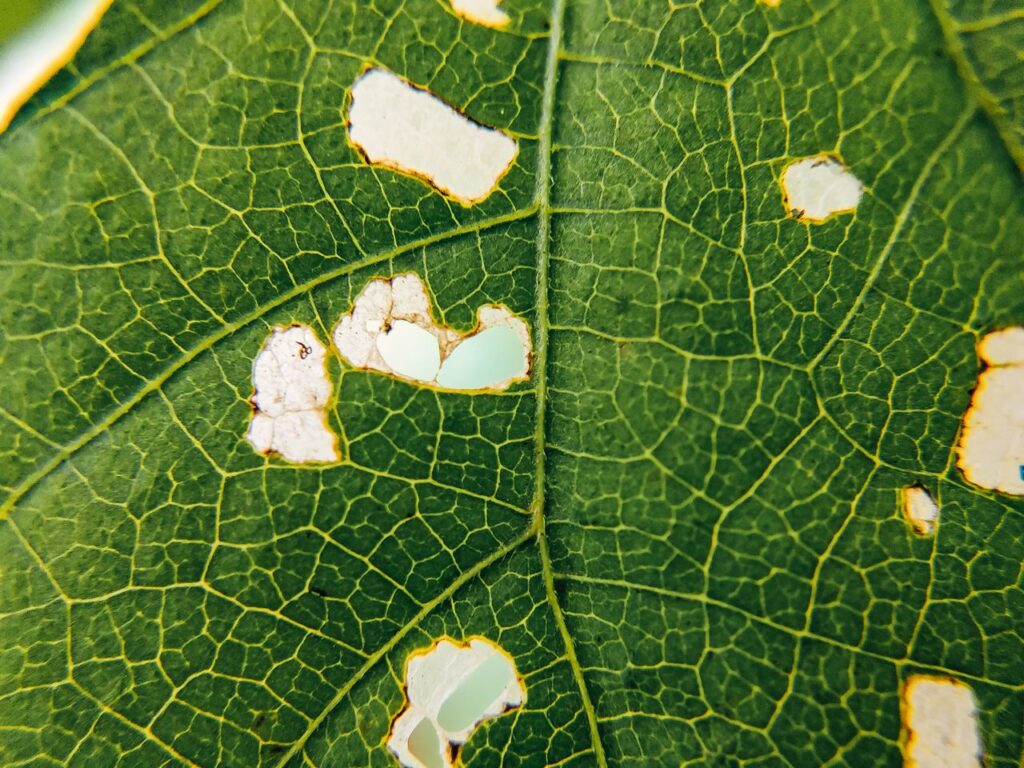
White spots on plant leaves can be caused by several different problems, so it is important not to assume that every pale mark is the same. Some white spots are caused by fungal growth, while others come from pests, dried minerals, physical damage, or environmental stress. Looking closely at the texture, location, and spread of the spots can help you understand what the plant is experiencing.
One common cause is powdery mildew. This fungal problem usually appears as white or pale grey powdery patches on the surface of leaves. It may begin as a few small spots before spreading across larger areas. Powdery mildew is more likely when plants are crowded, airflow is poor, and humidity remains high around the foliage. Unlike simple water marks, the powdery coating may spread and return after being wiped.
Tiny white marks may also be linked to sap-sucking pests such as spider mites, thrips, or whiteflies. Their feeding can create pale speckles, silvery patches, or faded areas across the leaf. Check the undersides carefully for tiny insects, webbing, sticky residue, or small black droppings. Pest damage often appears alongside curling, yellowing, or weak new growth.
Sometimes white spots are simply mineral residue left behind by tap water, fertiliser sprays, or foliar products. When droplets dry on the leaf surface, they may leave pale rings or chalky marks. These usually wipe away gently with a damp cloth and do not spread through the plant.
Strong sunlight can also cause bleached or scorched patches, especially when a shade-grown plant is suddenly moved into intense direct sun. These areas may look pale white, cream, or dry and papery. Unlike fungal growth, sun damage cannot be wiped away because the leaf tissue itself has been injured.
Natural leaf patterns should also be considered. Some plants have variegation, pale markings, or fine hairs that are completely normal. Compare the affected leaf with healthy leaves on the same plant before deciding that something is wrong.
At the end of the day, white spots are a symptom rather than a complete diagnosis. Check whether the marks are powdery, raised, removable, spreading, or linked to pests. Improve airflow, keep leaves from remaining wet unnecessarily, inspect regularly, and treat only after identifying the likely cause.
If you notice white spots appearing on leaves in your home garden, we would love to see what you discover. Tag @projectharvest.my on Instagram and share your plant symptoms, inspection process, and gardening journey with us — your experience might help another Malaysian beginner understand their plants more confidently too.