
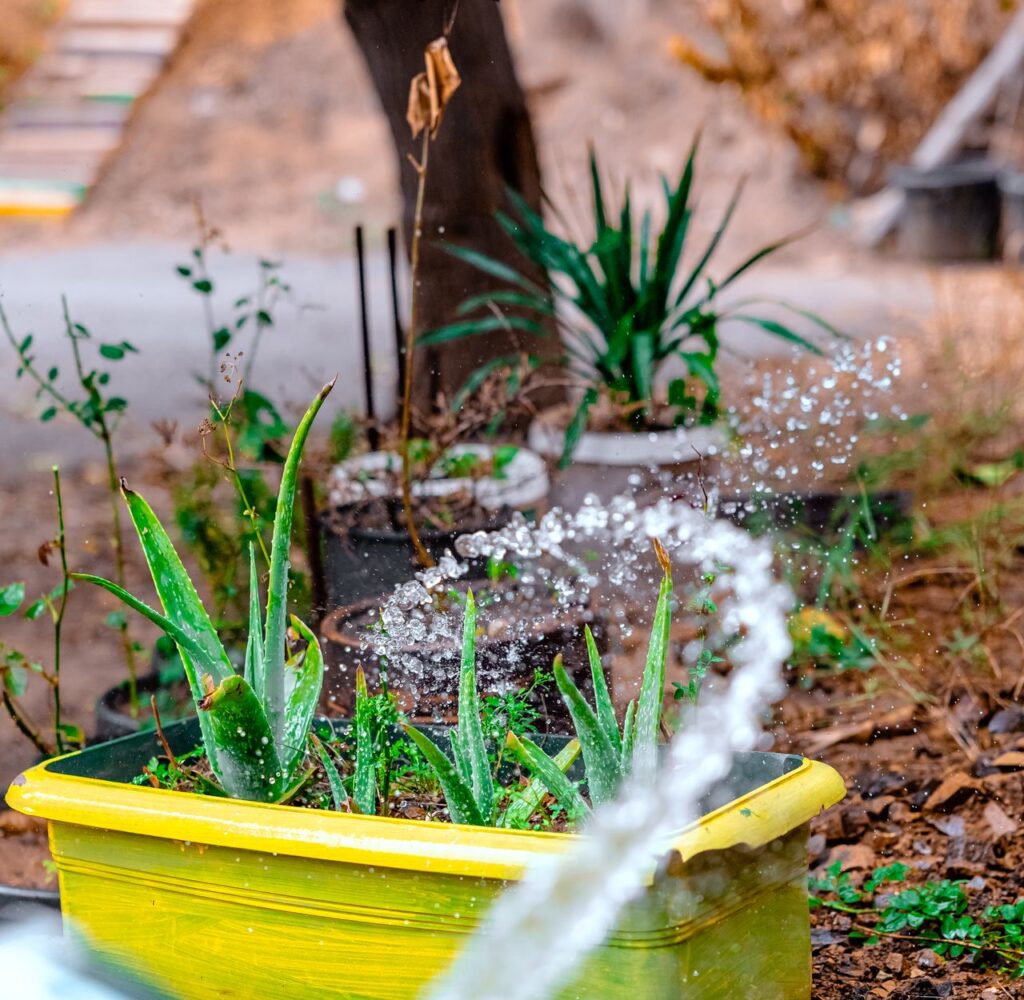
Watering a plant does not automatically mean its roots received enough water.
A quick splash may darken the top few centimetres of soil while leaving the deeper root zone almost completely dry. When this happens repeatedly, plants can develop shallow root systems concentrated near the surface.
Deep watering means applying enough water, slowly enough, for moisture to move well into the active root zone.
For Malaysian gardeners, this can help plants cope better with hot afternoons and short dry periods because deeper roots can access moisture that remains protected below the rapidly drying surface.
Why Shallow Watering Encourages Shallow Roots
Roots grow where they can find useful combinations of water, oxygen, and nutrients.
If the uppermost soil layer is watered lightly every day while deeper soil remains dry, roots have little reason to explore downward.
Over time, much of the root system may remain close to the surface.
This makes plants more vulnerable.
Surface soil heats up and dries much faster under Malaysia’s sun. A plant with shallow roots may therefore begin wilting quickly when you miss one watering session.
Deeper roots give plants access to a larger volume of soil and potentially more stable moisture.
What Does “Deep Watering” Actually Mean?
Deep watering does not mean flooding the garden.
It means wetting the soil to a meaningful depth for the plant you are growing.
For many established vegetables, encouraging moisture somewhere around 15 to 30 cm into the soil can provide a useful root zone.
Larger shrubs and fruit plants may have roots extending much deeper and wider.
Young seedlings are different. Their roots are still shallow, so they initially require moisture closer to the surface.
As plants establish, you can gradually encourage a deeper watering pattern.
The correct depth therefore depends on the crop, its age, soil type, and growing conditions.
Water Slowly Rather Than All at Once
Water needs time to soak into soil.
If you empty an entire watering can onto one spot in a few seconds, much of the water may run sideways or across the surface before penetrating deeply.
Apply water slowly.
With a hose, use a gentle flow rather than a powerful jet.
With drip irrigation, allow emitters enough time to wet the root zone below them.
For larger plants, you can water in stages.
Apply some water, wait several minutes, then return and water again.
This gives the first application time to begin moving downward before more is added.
Check How Deep the Water Actually Went
One of the best ways to learn deep watering is to physically inspect the soil.
After watering, wait long enough for moisture to move through the soil.
Then gently dig a small hole beside the plant using a trowel.
Look at the soil profile.
How deep does the darker, moist soil extend?
If only the top 3 cm is wet while everything beneath is dry, you are not watering deeply enough.
If the entire root zone is comfortably moist without being saturated, your watering is much closer to the goal.
Do this a few times and you will quickly learn how long your particular garden needs to be watered.
Soil Type Changes the Way Water Moves
Not all soil absorbs water in the same pattern.
Sandy soil allows water to move downward quickly and may not spread very far sideways.
That means sandy gardens may require more frequent watering, and emitters may need to be positioned carefully so roots throughout the area receive moisture.
Clay-heavy soil absorbs water more slowly but may hold it for longer.
Applying water too quickly to clay can cause runoff before moisture reaches deeper layers.
Slow watering is particularly useful here.
Well-structured loam generally offers a better balance between downward movement and water retention.
This is why irrigation schedules copied from another gardener do not always work.
Their soil may behave completely differently from yours.
Deep Does Not Mean Constantly Wet
This is an important distinction.
The goal is not to keep the entire soil profile saturated all the time.
Roots need oxygen.
Deep watering is usually paired with allowing the soil to begin drying appropriately before watering again.
For many established plants, fewer thorough watering sessions are better than constant tiny splashes.
However, this principle should not be pushed too far.
Do not deliberately allow moisture-loving plants to wilt severely between each watering simply to “train” their roots.
Aim for healthy moisture cycles, not repeated drought stress.
Containers Need a Different Approach
Deep watering applies to pots too, but containers behave differently from garden beds.
A properly watered container should usually receive enough water that the entire growing medium becomes moist and some excess drains from the bottom.
This helps confirm that water reached the lower root zone.
But if water immediately pours through while the centre remains dry, the potting mix may have become hydrophobic.
Likewise, if the container remains wet for many days after watering, drainage may be poor.
For pots, deep watering means evenly wetting the root ball, not simply using a large amount of water.
Water Beyond the Stem
As plants grow, roots spread outward as well as downward.
Do not always pour water directly against the stem.
For mature chillies, tomatoes, brinjal, shrubs, and fruit plants, apply water across a wider area of soil around the plant.
This encourages roots to explore beyond one tiny wet spot.
For trees and larger plants, active absorbing roots may be spread well away from the trunk.
Wetting a wider root zone can be more useful than repeatedly soaking the base.
Mulch Helps Deep Moisture Last Longer
Once water reaches deeper soil, mulch can help keep it there.
A layer of suitable organic mulch reduces direct evaporation from the surface and protects soil from intense heat.
This means the deeper root zone can remain moist longer between irrigation sessions.
Mulch also softens the impact of heavy rain and gradually contributes organic matter.
Keep mulch slightly away from stems and trunks rather than piling it directly against them.
Deep watering below and mulch above can be a very effective combination.
Drip Irrigation Can Make Deep Watering Easier
Drip irrigation works well because it delivers water slowly.
Instead of wetting a large surface quickly, a properly positioned emitter gives water time to move through the soil profile.
The important thing is allowing the system to run long enough.
A five-minute drip cycle may barely moisten the surface.
After installing a system, check the soil depth after different run times.
Once you know how long it takes to wet the root zone, you can programme your timer much more intelligently.
Ollas Can Encourage Deeper Moisture Too
Buried clay ollas provide another option.
Because water is released below the surface, moisture is already being delivered closer to the root zone.
Roots can grow towards the more consistently moist soil around the vessel.
For small raised beds, this can reduce the tendency to keep only the surface wet.
However, the wetting area depends on the olla size and soil type, so you still need to check how far moisture spreads.
Be Careful During Malaysia’s Rainy Periods
Deep watering is useful during dry conditions, but it should not become a fixed schedule throughout the year.
If heavy rain has already soaked the soil deeply, adding another long watering cycle may keep roots saturated unnecessarily.
Dig into the soil and check.
During rainy weeks, you may not need to irrigate at all.
During hot periods, deeper watering may become much more important.
Let soil moisture determine the schedule rather than the calendar alone.
New Seedlings Need Special Treatment
Young seedlings have small root systems close to the surface.
If you suddenly water only deeply and allow the top layer to dry significantly, those young roots may struggle.
Keep the upper root zone appropriately moist during establishment.
As the plant grows, increase the depth of watering and allow roots to explore more soil.
Strong root systems develop gradually.
You are not trying to force a tiny seedling to behave like a mature plant.
How Do You Know the Roots Are Getting Stronger?
You cannot easily see roots without digging up the plant, but above-ground behaviour can give you clues.
An established plant with a healthy root system may cope better between watering sessions.
It may wilt less rapidly during hot afternoons.
Growth may become more stable.
The plant may also anchor itself more firmly in the soil.
However, strong roots depend on more than watering.
Good soil structure, oxygen, nutrients, sufficient container size, and overall plant health all play a role.
Deep watering is one piece of the system.
A Simple Deep-Watering Routine
For established plants, try this approach:
Water slowly around the wider root zone.
Allow time for the moisture to soak in.
Check the soil 15 to 30 cm below the surface where practical.
If that depth is still dry, continue watering gradually.
Once the root zone is properly moist, stop.
Then wait until the soil has dried appropriately before watering again.
After repeating this process a few times, you will no longer need to dig every session because you will know approximately how your soil responds.
At the end of the day, deep watering is not about giving plants the largest possible amount of water. It is about making sure moisture reaches where the roots actually need it. Water slowly, check below the surface, widen the watering area as plants grow, and allow healthy drying between sessions rather than keeping soil permanently saturated. In Malaysia’s hot weather, a deeper and wider root system can give plants a much more reliable place to find moisture when the surface dries quickly.
Want to know whether your watering is really reaching the roots? Try checking the soil depth after your next watering session and share what you discover. Tag @projectharvest.my on Instagram with your soil profile, drip setup, watering experiment, or stronger-root progress. Your results might help another Malaysian gardener realise that a wet-looking surface does not always mean the plant underneath has been watered properly.