
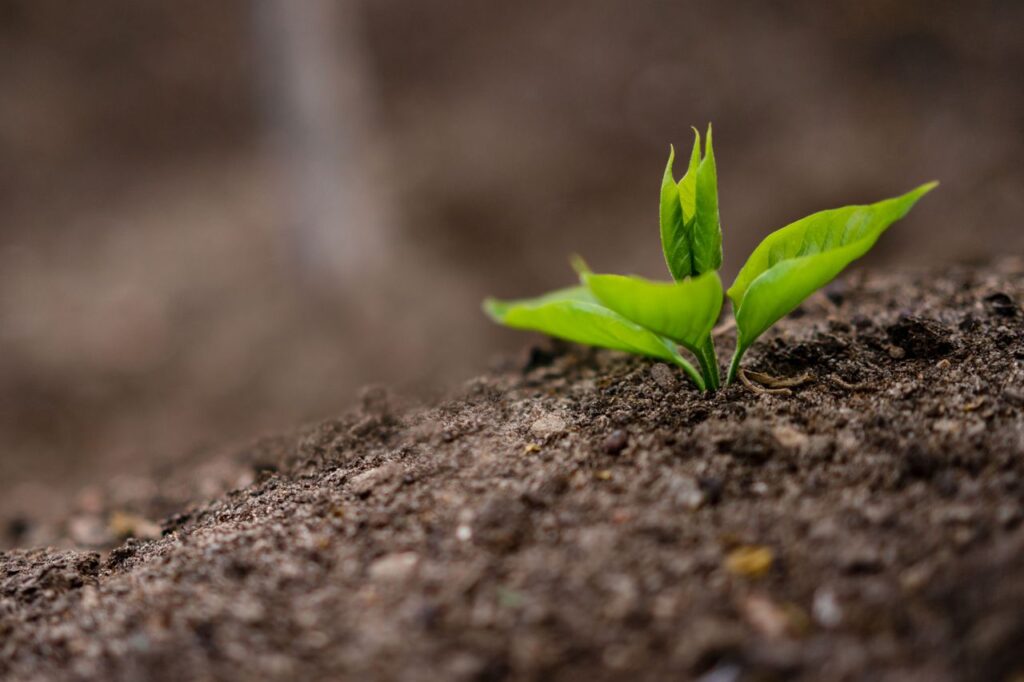
Nitrogen, phosphorus and potassium — usually shortened to N, P and K — are three of the main nutrients plants need in relatively large quantities.
They are often explained as:
Nitrogen = leaves
Phosphorus = roots and flowers
Potassium = fruit
That is a useful beginner shortcut, but it is not the full story.
All three nutrients are involved in multiple processes throughout the plant’s life.
A chilli plant does not suddenly stop needing nitrogen when it flowers.
A leafy vegetable still needs phosphorus and potassium.
And adding extra potassium does not automatically make fruit bigger.
Understanding what N, P and K actually do helps you fertilise plants based on their needs instead of relying on gardening myths.
Why Are They Called Macronutrients?
Plants require many different mineral nutrients.
Nitrogen, phosphorus and potassium are known as primary macronutrients because plants generally require them in relatively large amounts compared with micronutrients such as boron, zinc or manganese.
Plants also need other macronutrients, including:
calcium,
magnesium,
and sulphur.
So NPK is extremely important, but it is not the entire nutrition story.
A fertiliser containing N, P and K does not automatically provide everything a plant could possibly need.
What Does Nitrogen Actually Do?
Nitrogen is strongly associated with plant growth.
It is an important part of:
chlorophyll,
amino acids,
proteins,
enzymes,
and other essential plant compounds.
Chlorophyll is the green pigment involved in photosynthesis — the process plants use to capture light energy.
This is one reason adequate nitrogen is closely associated with healthy green foliage.
Plants with enough nitrogen can generally build leaves and shoots more effectively.
Nitrogen Supports More Than Just Leaves
You will often hear that nitrogen is the “leaf nutrient.”
That is partly true, but incomplete.
Nitrogen also supports:
stem growth,
protein formation,
enzymes,
overall plant metabolism,
and the leaves that ultimately provide energy for flowers and fruit.
A fruiting chilli still needs healthy leaves.
Those leaves make the carbohydrates that help support developing chillies.
So the goal when flowering starts is not to eliminate nitrogen.
It is to avoid excessive nitrogen while maintaining balanced nutrition.
What Can Nitrogen Deficiency Look Like?
Because nitrogen can be moved relatively easily within the plant, deficiency often becomes visible first on older leaves.
Possible signs include:
general pale green colour,
yellowing of older leaves,
slow growth,
smaller leaves,
and weak overall development.
But do not diagnose nitrogen deficiency from one yellow leaf.
Older leaves naturally die.
Waterlogging, root damage, disease and other problems can also cause yellowing.
Look at the overall pattern.
What Happens When You Give Too Much Nitrogen?
More nitrogen does not mean a better plant.
Excess nitrogen can encourage:
very large leaves,
rapid soft growth,
dark-green foliage,
and excessive vegetative growth.
For fruiting vegetables, this can sometimes mean a large impressive plant with disappointing flowering or fruit production.
Soft, lush growth may also be more vulnerable to certain pests and physical damage.
This is why repeatedly applying high-nitrogen fertiliser to a healthy chilli or tomato because you want faster growth can work against your real goal.
What Does Phosphorus Actually Do?
Phosphorus plays an essential role in how plants manage and transfer energy.
One of its important functions involves molecules such as ATP, which plants use to transfer energy within cells.
Phosphorus is also involved in:
root development,
cell division,
genetic material,
flowering,
seed formation,
and many other processes.
So describing phosphorus simply as “the root nutrient” or “the flower nutrient” misses much of what it does.
Does Extra Phosphorus Produce More Flowers?
Not automatically.
This is one of the most persistent fertiliser myths.
Plants require adequate phosphorus for normal reproduction and flowering.
But if the soil already contains sufficient phosphorus, adding much more does not necessarily produce extra flowers.
A chilli plant may fail to fruit because of:
heat,
poor pollination,
water stress,
excess nitrogen,
pests,
or inadequate sunlight.
Adding high-phosphorus fertiliser will not correct those problems.
More Phosphorus Can Create New Problems
Excessive phosphorus can affect the availability of some other nutrients in soil.
This means repeatedly applying high-phosphorus “bloom boosters” without knowing whether the plant needs them can create nutritional imbalance.
Phosphorus can also accumulate in soil.
Use fertiliser based on crop requirements and actual growing conditions rather than assuming flowers always require another dose of phosphorus.
What Does Phosphorus Deficiency Look Like?
Phosphorus deficiency can reduce growth and development.
Plants may become:
stunted,
slow growing,
or unusually dark in colour.
Some plants can develop reddish or purplish colouring, although colour alone is not a reliable diagnosis.
Cool soil, root problems and unsuitable pH can also reduce phosphorus uptake even if phosphorus is present.
In Malaysia, low soil temperature is generally less of an issue than in temperate climates, but pH and root health can still affect nutrient availability.
What Does Potassium Actually Do?
Potassium behaves differently from nitrogen and phosphorus.
It is not incorporated into plant tissues in exactly the same way as many other nutrients.
Instead, it plays important regulatory roles.
Potassium helps plants manage:
water movement,
stomatal opening and closing,
enzyme activity,
carbohydrate movement,
stress responses,
and many aspects of crop quality.
Stomata are tiny openings on leaves that help control gas exchange and water loss.
Potassium therefore contributes to the plant’s ability to regulate water efficiently.
Why Is Potassium Associated with Fruiting?
Fruiting crops often require substantial potassium because of its role in:
water regulation,
sugar movement,
enzyme activity,
and fruit development.
That is why fertilisers for tomatoes, chillies and other fruiting vegetables sometimes contain a higher proportion of potassium.
But calling potassium the “fruit nutrient” can be misleading.
A plant cannot build fruit successfully without:
nitrogen,
phosphorus,
calcium,
magnesium,
micronutrients,
water,
sunlight,
and healthy roots.
Potassium is important, not magical.
Potassium Does Not Automatically Make Fruit Bigger
If your chillies remain small because they are genetically a small-fruited variety, potassium cannot change their genetics.
If a tomato receives too little sunlight, potassium cannot replace sunlight.
If a cucumber has not been pollinated, potassium cannot make the failed flower develop into fruit.
This is why diagnosing the problem comes before selecting fertiliser.
What Can Potassium Deficiency Look Like?
Potassium deficiency often affects older foliage first because potassium is relatively mobile within the plant.
Possible symptoms may include:
yellowing or scorching near leaf margins,
weak growth,
poor stress tolerance,
and reduced crop performance.
However, leaf-edge damage can also come from:
fertiliser burn,
salt buildup,
water stress,
or disease.
Again, one symptom is rarely enough for a reliable diagnosis.
N, P and K Work Together
Plants do not use each nutrient independently.
Imagine a chilli plant receiving plenty of nitrogen but very little potassium.
It may grow lots of foliage but struggle to maintain balanced growth and fruit production.
Or imagine plenty of potassium but inadequate nitrogen.
The plant may not have enough healthy leaf area to support a large harvest.
Plant nutrition works as a system.
The goal is not to maximise one nutrient.
It is to provide enough of each nutrient in the right balance.
Different Crops Have Different Demands
A leafy vegetable such as bayam is grown primarily for foliage.
A chilli is grown for fruit.
A curry leaf plant may remain productive for years.
A cucumber grows rapidly and produces fruit over a shorter period.
These crops do not necessarily need identical fertiliser programmes.
Their needs also change with:
plant age,
growth stage,
soil condition,
container size,
and harvest intensity.
This is why one fertiliser cannot automatically be declared “the best fertiliser for every vegetable.”
Growth Stage Matters Too
Young plants need nutrients to build roots, stems and foliage.
As fruiting crops mature, the balance of demand changes.
However, there is no clean line where one nutrient suddenly stops being needed and another takes over.
A flowering tomato still needs nitrogen.
A young seedling still needs potassium.
Think of nutrition as changing proportions and demand, not switching individual nutrients on and off.
Soil pH Can Change Nutrient Availability
Your fertiliser may contain the right nutrients while the plant still struggles to access them.
Soil pH affects how available many nutrients are to roots.
If pH moves too far outside a crop’s useful range, certain nutrients can become less available even when they are physically present.
This is sometimes called nutrient lockout, although the real chemistry can be more complicated than the term suggests.
Before repeatedly adding fertiliser to a plant showing persistent deficiency-like symptoms, consider whether pH or root health may be involved.
Watering Affects Nutrition
Roots absorb nutrients from the soil solution.
That means water management and nutrient management are connected.
Severely dry soil can reduce nutrient uptake.
Waterlogged soil can damage roots and reduce their ability to function.
Heavy Malaysian rain can also wash soluble nutrients through containers.
A good fertiliser programme cannot compensate for consistently poor watering.
Containers Need Particular Attention
Container plants have a limited amount of growing medium.
Nutrients can:
be used by the plant,
wash out during frequent watering,
or accumulate as salts after repeated fertilisation.
For long-lived container chillies or brinjal, simply adding fertiliser indefinitely can eventually cause imbalance.
Watch both plant growth and the condition of the growing medium.
Fertiliser Numbers Tell You Concentration — Not Plant Requirements
A bag marked:
15-15-15
does not mean the plant itself requires nitrogen, phosphorus and potassium in a 15:15:15 biological ratio.
It tells you the declared concentration of those nutrients in the product.
Likewise:
12-12-17
contains proportionally more potassium than the first two nutrients.
To use either correctly, you still need to consider:
the crop,
application rate,
soil,
and growth stage.
Do Not Correct Every Problem with NPK
Some plant problems are not caused by NPK at all.
For example:
blossom-end rot involves calcium delivery,
iron deficiency can cause chlorosis in young leaves,
magnesium problems can affect leaf colour,
poor pollination can prevent fruit formation,
and root disease can make nutrients unavailable.
If the actual issue is not NPK, adding more NPK may only increase fertiliser salts.
Start with the Plant, Not the Fertiliser Bag
Before feeding, ask:
What am I growing?
Is it actively growing?
Is it leafy or fruiting?
Are there genuine deficiency symptoms?
When was it last fertilised?
Is the soil too wet or dry?
Does it get enough sunlight?
Is the container large enough?
Are the roots healthy?
Those questions often matter more than whether one fertiliser says 15-15-15 and another says 12-12-17.
A Simple Way to Remember NPK
If you want a beginner-friendly shortcut, use this:
Nitrogen — strongly supports leafy and vegetative growth.
Phosphorus — supports energy transfer, roots and reproductive processes.
Potassium — supports water regulation, stress response and crop development.
But add one more sentence:
Every healthy plant needs all three.
That keeps the shortcut useful without turning it into a gardening myth.
Balanced Nutrition Is the Real Goal
The best fertiliser programme is not the one with the highest nitrogen, phosphorus or potassium.
It is the one that provides enough nutrition for the crop without:
waste,
toxicity,
salt buildup,
or imbalance.
That may involve:
fertiliser,
mature compost,
healthy soil,
appropriate pH,
good watering,
and observation.
Fertiliser works best when the rest of the growing system works too.
At the end of the day, nitrogen, phosphorus and potassium are not simply “leaf, root and fruit fertilisers.” Nitrogen supports chlorophyll, proteins and vegetative growth; phosphorus is central to energy transfer, roots and reproduction; and potassium helps regulate water, enzymes, stress responses and crop development. Malaysian home gardeners will get better results by thinking about these nutrients as an interconnected system rather than trying to force leaves, flowers or fruit with one high-number fertiliser. Feed according to the plant, the soil and the growth stage — not just the biggest number on the packet.
Got an NPK fertiliser you are currently using on your chillies, vegetables, herbs or fruiting plants? Share the label, what you are growing and how the plants are responding, and tag @projectharvest.my on Instagram. Comparing real Malaysian gardens can help all of us understand what those N, P and K numbers actually look like once they move from the fertiliser packet into a living plant.